
Is Sonoma County a Buyer’s or Seller’s Market Right Now? Who Really Has the Upper Hand Heading Into 2027?
buying home Nima Kazeroonian November 22, 2026
buying home Nima Kazeroonian November 22, 2026
The Truth About Home Prices, Price Reductions, Seller Credits, Mortgage Rates, and Negotiating a Better Real Estate Deal
By Nima Kazeroonian | Broker Associate, Coldwell Banker Realty | CA DRE #01491305
November 21, 2026
Imagine two neighboring homes in Sonoma County, each listed for $800,000.
One receives multiple offers and sells near or above its asking price. The other remains on the market for two months, undergoes a price reduction, and eventually sells with the seller contributing thousands of dollars toward the buyer's closing costs.
Same neighborhood. Similar asking prices. Two very different outcomes.
How is that possible?
More importantly, what does it tell us about today's Sonoma County housing market?
If you're considering buying or selling a home in Santa Rosa, Windsor, Petaluma, Rohnert Park, Sebastopol, or elsewhere in Sonoma County, you're probably wondering whether buyers or sellers currently have the advantage.
After more than 21 years of working in real estate, I believe we're experiencing a market where neither side should assume it has complete control.
Buyers have meaningful negotiating opportunities, but sellers still have leverage when their properties are positioned correctly.
The difference between a successful transaction and a disappointing one increasingly comes down to understanding the numbers, recognizing opportunities, and negotiating effectively.
Here's what every Sonoma County buyer and seller should know heading into 2027.
The short answer: Sonoma County is experiencing a selective, relatively balanced market with negotiating opportunities that vary considerably by property, neighborhood, and price range.
According to the California Association of REALTORS®' October 2026 Home Sales and Price Report, released November 17, Sonoma County's existing single-family housing market recorded the following results:
Market indicator | October 2025 | October 2026 |
|---|---|---|
Median sold price | $822,500 | $826,000 |
Annual price change | — | +0.4% |
Unsold inventory index | 3.2 months | 3.2 months |
Median days on market | 69 days | 63 days |
Annual change in sales volume | — | -7.3% |
These figures tell an interesting story.
Home prices remain relatively resilient compared with a year ago, even though fewer transactions are taking place.
Available inventory, measured relative to the current sales pace, remains unchanged from October 2025.
Meanwhile, the median time on market decreased.
This is not evidence of a widespread housing collapse. It is also not evidence that sellers can demand whatever price they want.
Instead, we're seeing a market in which buyers remain financially cautious, but appropriately positioned homes continue to sell.
The statewide picture reinforces that point. California's October existing single-family home sales declined 12.7% year over year, while its median home price remained essentially unchanged.
The housing market is experiencing an affordability problem more clearly than a widespread price-collapse problem.
And understanding that distinction could help both buyers and sellers make smarter decisions.
One of the most interesting aspects of today's real estate market is the difference between competing properties.
According to a November 19, 2026, Sonoma Valley Wag housing market analysis, using Zillow's public market data, approximately 37% of Sonoma County home sales closed above their asking prices in September 2026.
Meanwhile, approximately 26% of active listings experienced a price reduction in October.
These statistics cover different groups of properties and reporting periods, but together they illustrate an important reality: buyers are still willing to compete for certain homes, even as other sellers find themselves adjusting their expectations.
Why?
Several factors can influence how buyers respond to a property:
A beautifully prepared home with realistic pricing can attract substantial interest, even when the broader housing market slows.
On the other hand, an overpriced home may struggle despite having attractive features.
For sellers, the lesson is straightforward: don't confuse what you would like to receive with what today's buyers are prepared to pay.
For buyers, don't assume every home offers the same negotiating opportunity.
According to Freddie Mac, the national average 30-year fixed mortgage rate reached 7.28% on November 19, 2026, compared with 6.26% one year earlier.
That difference has a meaningful impact on housing affordability.
Today's buyers aren't simply asking whether they can afford an $800,000 home.
They're asking whether they can comfortably afford the mortgage payment, property taxes, insurance, maintenance, and possibly homeowners association dues.
This creates a challenge for sellers who focus exclusively on their asking price.
Two homes with identical purchase prices can have significantly different monthly ownership costs.
A condominium with substantial HOA dues, for example, may have a higher monthly cost than a similarly priced detached home without an association.
Likewise, a property requiring expensive homeowners insurance or immediate repairs may stretch a buyer's budget further than expected.
As a result, sellers should understand how buyers evaluate the complete financial picture.
And buyers should recognize that negotiating a better deal doesn't always mean negotiating a lower purchase price.
This is one of the most important real estate conversations buyers and sellers should be having right now.
Imagine a home listed for $800,000.
A buyer wants the seller to make a $20,000 financial concession. There are several ways they might structure the transaction.
The buyer offers $780,000 instead of $800,000.
Assuming a 20% down payment, the buyer would need $156,000 down rather than $160,000. The mortgage amount would also decrease from $640,000 to $624,000.
That creates a smaller loan balance and lower monthly principal-and-interest payments, assuming the same interest rate and loan term.
The buyer agrees to an $800,000 purchase price but requests a $20,000 seller contribution toward eligible closing costs.
Subject to lender requirements and actual eligible expenses, this could help the buyer preserve significantly more cash at closing.
The funds might be used toward approved closing expenses, prepaid costs or discount points.
If inspections identify significant issues, the parties might negotiate repairs, an eligible credit, or an adjusted purchase price.
The appropriate solution depends on the property's condition, financing requirements, and what both parties are comfortable accepting.
Here's how the first two approaches compare:
Transaction detail | Price reduction | Seller credit |
|---|---|---|
Original asking price | $800,000 | $800,000 |
Agreed purchase price | $780,000 | $800,000 |
Seller credit | $0 | $20,000 |
Buyer down payment at 20% | $156,000 | $160,000 |
Mortgage amount | $624,000 | $640,000 |
Seller proceeds before other expenses | $780,000 | $780,000 |
Primary buyer benefit | Lower loan balance | Reduced eligible cash expenses at closing |
Illustrative example only. Actual seller proceeds, lending limits, transaction expenses, appraisal requirements, and buyer costs may differ.
For some buyers, the lower purchase price makes more sense.
For others, preserving cash at closing could be more valuable.
The Consumer Financial Protection Bureau also explains how mortgage discount points can reduce interest rates in exchange for upfront costs.
When permitted, a seller contribution might help cover those costs.
However, a higher purchase price combined with a credit can also mean a larger mortgage and potentially greater long-term borrowing costs.
That's why buyers should compare the alternatives with their mortgage professional before structuring an offer.
The best deal isn't necessarily the one with the lowest purchase price. It's the one that makes the most sense financially and practically for the buyer.
Seller concessions have become an increasingly relevant part of real estate negotiations.
According to Redfin's September 2026 seller concessions report, approximately 44.7% of transactions in its national sample included a seller concession during the three months ending August 2026.
That increased from 42.6% during the comparable period one year earlier.
Concessions may include contributions toward closing costs, repairs, or other negotiated expenses.
Redfin also found that concessions were less common in certain competitive Bay Area markets than in many parts of the country.
Therefore, its national percentage should not be interpreted as the actual concession rate in Sonoma County.
Nevertheless, the research demonstrates why sellers should be prepared to evaluate offers that include requests for financial assistance.
A buyer requesting a seller credit is not necessarily presenting a weak offer.
They may be financially qualified but prefer to preserve savings for emergencies, furniture, renovations, or other expenses associated with purchasing a home.
For sellers, the more important question is how the request affects the overall transaction.
An offer should be evaluated based on estimated net proceeds, financing strength, contingencies, closing timeline, and the likelihood of a successful closing.
Focusing exclusively on the headline purchase price can be a costly mistake.
There isn't one city or neighborhood where every buyer automatically has the advantage.
However, buyers can look for certain signals that suggest a property might offer negotiating flexibility.
A property that has remained available substantially longer than comparable homes deserves further investigation.
Sometimes the explanation is an ambitious original asking price. Other times, the property has unusual characteristics or needs improvements.
Understanding the reason is essential before submitting an offer.
A history of price adjustments may indicate that the seller is responding to market conditions.
It doesn't establish desperation or guarantee another reduction.
However, comparing the original asking price, current price, and comparable sales can help identify a reasonable offer strategy.
Some sellers of vacant homes may have ongoing expenses associated with mortgages, utilities, insurance, taxes, and maintenance.
Depending on their circumstances, an efficient closing could be attractive.
Others may have the financial flexibility to wait indefinitely.
The individual seller's circumstances matter more than the fact that a home is vacant.
Some buyers overlook homes requiring cosmetic improvements.
If the necessary work is manageable and the price reflects the condition, buyers may discover opportunities that aren't apparent in more extensively renovated properties.
Professional inspections and realistic repair estimates are essential.
Interested in seeing what opportunities are currently available?
Explore Sonoma County Homes for Sale
You can search by city, ZIP code, neighborhood, property type, and price range.
If you find a property that interests you, I'm happy to review its pricing history and comparable sales with you.
Although affordability challenges are influencing buyer decisions, sellers shouldn't assume they must automatically reduce their prices or offer financial concessions.
Certain properties can retain substantial negotiating leverage.
Examples may include homes with desirable single-level floor plans, competitive pricing, well-maintained interiors, functional layouts, and features that are difficult to find among current listings.
A home that offers something meaningfully different from its competition can still attract multiple buyers.
This is particularly important in Sonoma County because neighborhood-level inventory can vary considerably.
A countywide inventory figure doesn't tell a homeowner how many directly comparable properties are currently available within their immediate area.
That is where a detailed comparative market analysis becomes valuable.
Before listing a property, I would want to understand:
A well-positioned home is not necessarily the least expensive home in its neighborhood.
It's a home whose asking price can be supported by its features, condition, and current market evidence.
Find Out What Your Sonoma County Home Could Be Worth
One of the biggest mistakes buyers and sellers make is treating the entire county as a single housing market.
Let's look at how different communities may require different strategies.
Santa Rosa's diverse housing inventory makes neighborhood-specific research particularly important.
Bennett Valley, Rincon Valley, Fountaingrove, Coffey Park, Oakmont, northeast Santa Rosa, and southwest Santa Rosa offer different housing characteristics and price ranges.
Buyers should evaluate recent comparable sales and total ownership costs rather than assume a citywide median represents every neighborhood.
For Santa Rosa homeowners, I recommend researching comparable properties within your immediate market area before determining an asking price.
Windsor offers a variety of detached homes, planned communities, townhomes, and other residential properties.
Sellers should examine how many similar homes are available within their subdivision or surrounding area.
Buyers should compare the condition, lot characteristics, HOA obligations, and pricing of competing properties.
Limited directly comparable inventory could strengthen a seller's position even when the broader market is relatively quiet.
Rohnert Park's neighborhood sections, including the K, M, and W sections, and the surrounding Cotati market deserve individual analysis.
For buyers considering condominiums and townhomes, HOA dues, reserves, insurance, and potential assessments are particularly important.
A lower asking price doesn't necessarily translate into a lower total monthly housing expense.
East Petaluma and West Petaluma offer different property characteristics and housing options.
Buyers may place different values on proximity to downtown, transportation access, lot size, architectural style, and property condition.
For sellers, understanding which homes represent genuine competition is more useful than relying exclusively on Petaluma's overall median price.
Rural and semi-rural properties can introduce additional considerations, including acreage, wells, septic systems, property access, insurance, and permit documentation.
These issues may become significant components of negotiations.
A property that initially appears attractively priced could require substantial additional investment. Conversely, a well-maintained rural property with comprehensive documentation may offer meaningful advantages.
These communities encompass different price points and property types, ranging from established residential neighborhoods to distinctive estates and rural properties.
Luxury and highly customized homes may require longer marketing periods simply because their potential buyer pool is smaller.
A longer listing period does not necessarily establish that a seller is overpriced or willing to accept a significantly lower offer.
The property-specific evidence remains the most important consideration.
Explore Sonoma County Cities and Neighborhoods
This remains one of the most difficult decisions facing prospective homebuyers.
Some are waiting for mortgage rates to decline.
Others expect home prices to soften.
And some are hoping both will happen simultaneously.
The challenge is that those conditions cannot be predicted with certainty.
Consider three possible outcomes for 2027.
Lower borrowing costs could improve affordability and encourage additional buyers to enter the market.
However, increased competition could also reduce negotiating opportunities for certain homes.
Buyers may continue to have difficulty qualifying for higher-priced properties.
Some sellers could become more flexible, but financing expenses would remain an important consideration.
Home prices might soften while borrowing costs increase, or financing might become cheaper while home prices rise.
Either development could complicate a buyer's decision to wait.
The important point is that predicting one market variable is not enough.
Buyers need to evaluate purchase prices, borrowing costs, available inventory, and their own financial circumstances together.
For additional perspective, read my Sonoma County Home Price Outlook.
My recommendation is simple: if you find a suitable property, can comfortably afford its ownership costs, and have the opportunity to negotiate reasonable terms, don't dismiss it solely because you're waiting for a better market.
At the same time, don't purchase a home if doing so would create financial stress.
For sellers, the decision involves a different set of considerations.
Spring traditionally brings additional real estate activity, but it can also bring additional competition.
Waiting may make sense if your home needs preparation, your moving plans aren't finalized, or your preferred selling timeline is flexible.
However, postponing a sale solely because you expect home prices to increase can also introduce uncertainty.
Future prices depend on mortgage rates, employment conditions, buyer demand, available inventory, and other economic developments.
None of those factors is guaranteed.
If you're considering selling in 2027, now is a reasonable time to begin answering some fundamental questions.
How much equity do you have?
What could your home realistically sell for?
What would your estimated proceeds be after selling expenses and outstanding obligations?
Which repairs or improvements might be worthwhile before listing?
Where would you move after selling?
Would your next mortgage substantially increase your monthly housing expenses?
These questions deserve attention before making a decision about when to list.
Sometimes homeowners discover that selling sooner makes sense.
Others determine that remaining in their current home is the better option.
My role is to help homeowners understand their choices, not pressure them into making a move.
For sellers, this is one of the most important lessons in real estate.
Imagine receiving these two hypothetical offers:
Offer terms | Buyer A | Buyer B |
|---|---|---|
Purchase price | $820,000 | $800,000 |
Requested seller credit | $20,000 | $0 |
Price less seller credit | $800,000 | $800,000 |
Down payment | 5% | 30% |
Investigation period | 17 days | 10 days |
Proposed closing | 45 days | 25 days |
Both offers produce the same purchase price less the stated seller credit, before other expenses.
However, their timelines, financing structures, and contractual terms are different.
Buyer B's shorter timeline might be more convenient for a particular seller.
Buyer A could still be the better choice depending on lender approval, the seller's plans, and other negotiated terms.
A higher down payment by itself does not guarantee a stronger buyer or a successful closing.
Likewise, a lower down payment does not automatically mean that a buyer is unqualified.
The entire offer deserves evaluation.
This is why experienced representation matters.
Negotiating a transaction involves far more than agreeing on a purchase price.
Sonoma County is experiencing a selective market. Buyers may have negotiating opportunities on properties with extended marketing periods or ambitious pricing, while appropriately priced homes can still attract strong competition.
According to the California Association of REALTORS®, Sonoma County's October 2026 median existing single-family home price was $826,000, approximately 0.4% higher than October 2025. Individual neighborhoods and property types may experience different trends.
There is no universal percentage. An appropriate offer depends on comparable sales, property condition, listing history, competing offers, and current inventory. Offering substantially below asking without reviewing those factors could cause a buyer to miss an otherwise reasonable opportunity.
Yes. Buyers can request seller contributions toward eligible closing expenses as part of an offer. Whether the seller agrees, and how much the lender permits, depends on the transaction and financing program.
It depends on the buyer's financial priorities. A price reduction can decrease the mortgage balance, while an eligible seller credit can help reduce upfront closing expenses. Buyers should compare both approaches with their mortgage professional.
That remains uncertain. Lower mortgage rates could increase buyer demand, but additional listings could also enter the market. Local inventory, financing conditions, and neighborhood-specific demand will influence which side has greater negotiating leverage.
Your home's value depends on comparable sales, condition, location, features, competing inventory, and current market activity. A personalized comparative market analysis can provide a more relevant assessment than a countywide median.
The Sonoma County housing market heading into 2027 isn't simple enough to classify every transaction as a buyer's market or a seller's market.
Some buyers will negotiate excellent terms.
Some sellers will receive multiple competitive offers.
Others may need to adjust their expectations.
The people who are best prepared generally have a clearer understanding of the available inventory, comparable sales, ownership expenses, contractual terms, and their own financial priorities.
That's where local experience becomes particularly important.
I've been helping buyers and sellers navigate the Sonoma County and greater Bay Area real estate markets since 2005.
Over the years, I've worked through highly competitive markets, declining markets, recovering markets, and periods of significant economic uncertainty.
One thing has remained consistent throughout those cycles: understanding the market is more valuable than trying to predict it perfectly.
Whether you're considering buying your first home, selling a longtime residence, downsizing, purchasing an investment property, or simply exploring your options for 2027, I'm happy to help.
I'd like to offer something more useful than a general countywide market forecast.
If you're a homeowner, send me your property address.
I can review recent sales, competing listings, and current market conditions to help you understand your home's estimated value and competitive position.
If you're a buyer, send me a property you're interested in.
I can review its pricing history, comparable sales, and other relevant market information to help you evaluate potential negotiating opportunities.
You don't need to be ready to buy or sell.
You don't need to make a commitment.
Sometimes a simple conversation is the most valuable first step.
Request Your Free Home Valuation
Search Sonoma County Homes for Sale
Contact Me for a Personalized Real Estate Consultation
Nima Kazeroonian
Broker Associate | REALTOR®
Coldwell Banker Realty
CA DRE #01491305
Serving Sonoma County and the Greater Bay Area Since 2005
Call or Text: 707-486-9055
Website: www.nima.homes
Market information is based on the cited sources available as of November 21, 2026. Future housing market conditions are uncertain. Financing examples are hypothetical and are not lending offers. Actual property values, transaction costs, financing requirements, and negotiating outcomes vary.
buying home
The Truth About Home Prices, Price Reductions, Seller Credits, Mortgage Rates, and Negotiating a Better Real Estate Deal

Fewer Competing Listings, Motivated Buyers, and a Holiday Housing Market That Could Create Opportunities Before 2027

What Santa Rosa, Windsor, Petaluma, Sebastopol, and Sonoma County Homeowners Should Know About Wildfire Risk, Insurance Costs, and Selling a Home

buying home
Home Prices, Mortgage Rates, and What Buyers and Sellers Should Know in Santa Rosa, Windsor, Petaluma, Rohnert Park, and Across Sonoma County
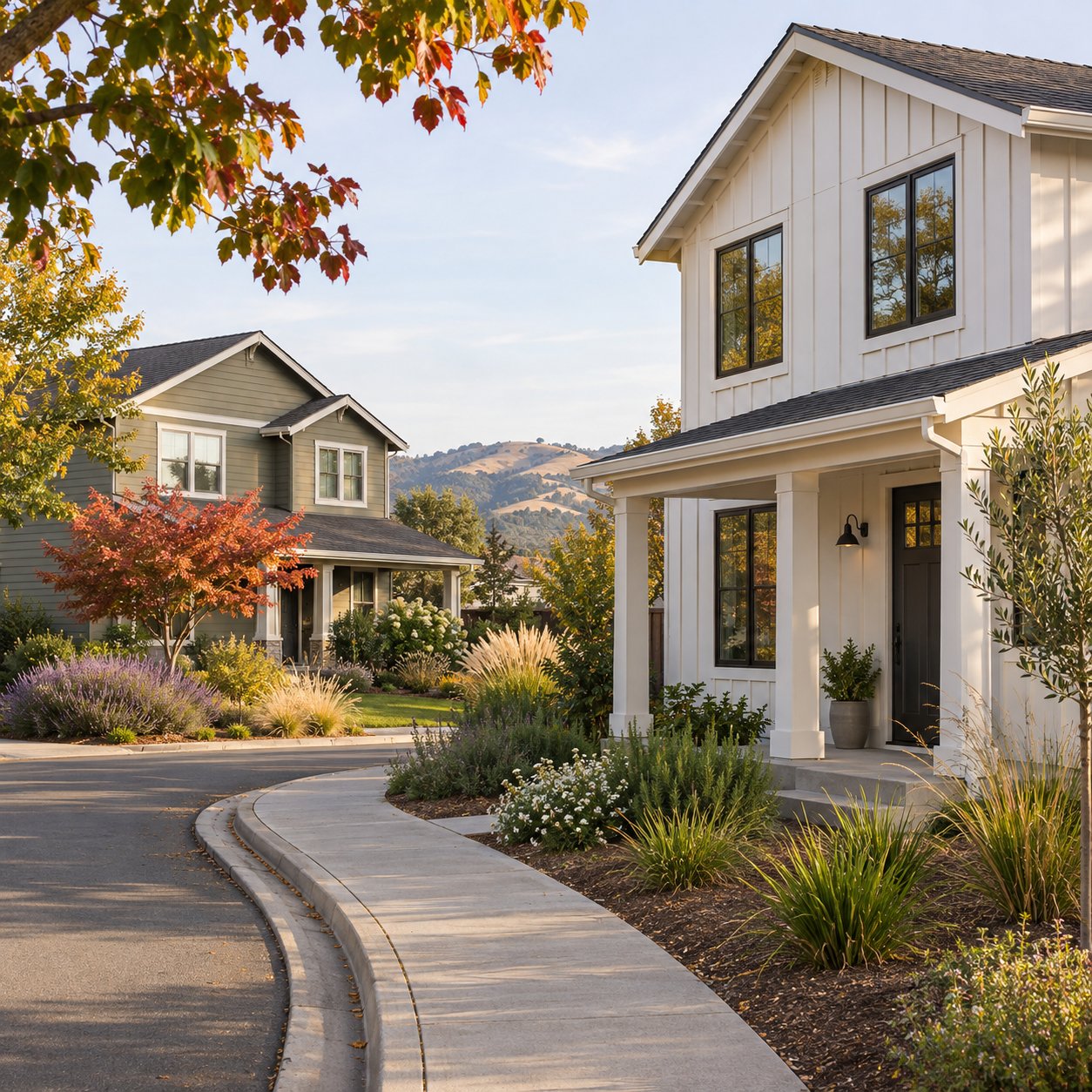
Two 2026 sales, three costs to compare, and what nearby new construction means for WillowGlen homeowners.

buying home
A November 5, 2026, zoning change brings fresh questions about backyard cottages, rental income, and resale value. Here’s what buyers, sellers, and homeowners should k… Read more

Compare Petaluma, Rohnert Park, Cotati, Santa Rosa, and Windsor for a move that works on office days and at home—with SMART, ferry connections, and practical homebuyin… Read more

buying home
Can your next move fit your budget? Compare current Santa Rosa housing data, sample ownership costs, and the expenses buyers and sellers should review.

real estate
A practical guide to comparing local agents, evaluating their advice, and choosing the right representation for your next move.
Whether you're buying, selling, or exploring options, Nima is dedicated to making the process smooth, informed, and rewarding. Reach out today for a personalized consultation and let’s make your real estate goals a reality!