
Federal Reserve Raises Rates 0.25%: What It Means for the Sonoma County Housing Market
Nima September 16, 2026
Nima September 16, 2026
The Federal Reserve raised its benchmark interest-rate range by 0.25 percentage points on September 16, 2026. The new federal funds target range is 3.75% to 4.00%.
The unanimous decision came as the Federal Reserve acknowledged that the economy remains resilient while inflation is still running above its long-term 2% target. The central bank described economic activity as expanding at a solid pace, with strong productivity, continued business investment, and a relatively stable unemployment rate.
For homebuyers and sellers in Sonoma County, the important question is not simply whether the Federal Reserve raised rates. The bigger questions are what happens to mortgage rates next, whether homes will continue selling, and which properties will have the best chance of attracting buyers this fall.
The short answer is that the housing market is not stopping. Transactions will continue, but buyers are likely to become even more selective. Homes that are priced correctly, properly prepared, easy to insure, and positioned for the largest possible buyer pool should have the strongest advantage.
At its September meeting, the Federal Open Market Committee raised the federal funds target range from 3.50%–3.75% to 3.75%–4.00%.
According to the Federal Reserve’s September 16 statement, inflation remains elevated, and the rate increase is intended to help return inflation to the central bank’s 2% goal.
It is important to understand that the federal funds rate is not a consumer mortgage rate. It is the short-term interest rate banks use when lending reserve balances to one another.
The Fed’s decision has a more direct effect on short-term borrowing products such as credit cards, home equity lines of credit, adjustable-rate loans, and certain business loans. Thirty-year mortgage rates are influenced more heavily by the bond market, inflation expectations, the 10-year Treasury yield, mortgage-backed securities, and expectations about future economic growth.
That means a 0.25% Fed increase does not automatically produce a 0.25% increase in mortgage rates.
Mortgage rates can sometimes fall after a Fed rate increase if investors believe the Fed is successfully bringing inflation under control. Conversely, mortgage rates can rise even when the Fed leaves its benchmark rate unchanged if inflation expectations or Treasury yields increase.
As of September 10, 2026, the average 30-year fixed mortgage rate was 6.76%, while the average 15-year fixed rate was 6.09%, according to Freddie Mac’s Primary Mortgage Market Survey.
My expectation is that mortgage rates will remain volatile and generally elevated in the near term. Buyers should be prepared for 30-year rates to move around in the upper-6% range and potentially cross 7%, depending on inflation reports, Treasury yields, employment data, and investor reaction to the Fed’s policy direction.
A major decline in mortgage rates does not appear imminent based on the Fed’s latest projections.
In its September 2026 Summary of Economic Projections, the median Federal Reserve participant projected the federal funds rate at approximately:
These are projections, not guarantees. However, they suggest that Federal Reserve officials currently expect interest rates to remain restrictive longer than many buyers and sellers may have hoped.
The Fed’s projected 2026 rate is also higher than its June projection. That is a significant signal: policymakers are not currently forecasting a quick return to very low borrowing costs.
Yes, but mortgage rates would most likely need help from several economic developments.
Rates could decline if:
Rates could increase if:
The most realistic near-term outlook is not a straight move up or down. Buyers should expect mortgage rates to fluctuate, sometimes significantly, as each new inflation and employment report is released.
Even a relatively small rate movement can affect affordability.
For example, on a $640,000, 30-year mortgage, the approximate principal-and-interest payment would be:
These estimates do not include property taxes, homeowners insurance, mortgage insurance, or HOA dues.
A half-percentage-point increase from 6.50% to 7.00% adds approximately $213 per month to the principal-and-interest payment. That can reduce how much a buyer qualifies to borrow or cause a buyer to focus on a less expensive property.
This is why the interest rate environment affects the entry-level and middle portions of the market so strongly. These buyers are often purchasing based on a maximum monthly payment rather than simply a maximum sales price.
Yes. Homes will continue selling in Sonoma County.
People do not buy and sell homes only because mortgage rates are favorable. Transactions are also driven by marriages, divorces, job changes, growing families, retirement, relocation, estate sales, downsizing, investment decisions, and changes in financial circumstances.
California’s market was still producing sales before today’s decision. The California Association of REALTORS® reported that statewide existing single-family home sales increased 2.4% from July to August and were 1.4% higher than in August 2025.
However, the statewide numbers do not mean every home or every region performed equally.
In the San Francisco Bay Area, August sales were down 4.2% from the previous year. Sonoma County’s August median single-family sale price was $790,000, down 6.0% from July and 5.1% from August 2025. Sonoma County sales were also down 7.5% month over month and 7.8% year over year.
Sonoma County had approximately 3.7 months of unsold inventory in August, up from 3.4 months in July. The median time on the market was 60 days, compared with 62 days in July and 67 days one year earlier.
Those figures describe a market that is active but price-sensitive. There are buyers, but they are taking their time, comparing properties carefully, and avoiding homes they believe are overpriced or likely to require substantial additional expenses.
Not every property will be affected in the same way. The following categories should have the strongest opportunity to sell quickly in this market.
Accurate pricing will be the most important factor.
Buyers can see price reductions, days on market, comparable sales, and competing listings almost immediately. A seller who starts too high may lose the most motivated buyers during the first two weeks—the period when a new listing typically receives its greatest attention.
The best strategy is not necessarily to price below market value. It is to price within a range that buyers and appraisers can support based on recent comparable sales.
A well-priced home can still receive strong activity. An overpriced home may sit until the seller makes a noticeable adjustment.
With mortgage payments already stretching many household budgets, buyers may have limited cash remaining for major repairs after closing.
Properties with updated kitchens and bathrooms, newer flooring, fresh interior paint, modern lighting, well-maintained landscaping, and clean inspection reports can have a major advantage.
Buyers do not always require a completely remodeled home. They do, however, want to understand what they are purchasing and what it may cost them after closing.
With Sonoma County’s August single-family median at $790,000, homes positioned below or near that level can reach a larger group of financed buyers.
This may benefit well-priced properties in Santa Rosa, Rohnert Park, Cotati, Windsor, and portions of Petaluma. The exact response will still depend on the neighborhood, condition, lot, schools, insurance availability, and competing inventory.
A smaller but well-maintained home may sell faster than a larger property requiring extensive repairs because the lower purchase price and future maintenance costs are easier for buyers to manage.
Single-story homes can appeal to first-time buyers, families, older buyers, and people planning to remain in the property long term.
Low-maintenance homes, townhomes, and condominiums may also appeal to buyers who want predictable exterior maintenance. However, HOA financial strength, monthly dues, insurance coverage, pending assessments, and lending eligibility will be extremely important.
A condominium with affordable dues and a financially stable HOA can be attractive. A similar property with a major assessment or insurance problem may take considerably longer to sell.
Insurance has become a central part of the Northern California purchase decision.
Homes with newer roofs, updated electrical systems, documented maintenance, defensible space, clear access, and favorable insurance histories may stand out. Sellers should consider obtaining insurance information early rather than waiting until a buyer is already in contract.
In rural areas such as Penngrove, Sebastopol, Occidental, Healdsburg, and parts of northeast Santa Rosa, insurance availability can influence both the buyer’s monthly housing expense and the lender’s willingness to complete the loan.
A seller does not always need to reduce the price to improve affordability.
Depending on the offer and loan program, a seller credit may help a buyer pay closing costs or obtain a temporary or permanent mortgage-rate buydown. In some cases, a carefully structured credit can produce a more meaningful payment reduction than a modest price adjustment.
The seller’s net proceeds, appraisal risk, buyer qualification, and lending rules must all be considered before deciding which strategy is best.
Unique properties can still sell, but “unique” cannot be used as a substitute for accurate pricing.
Homes with usable acreage, exceptional views, detached guest space, workshops, vineyards, equestrian facilities, or income potential may attract specialized buyers. Those buyers exist, but the marketing must clearly explain the property’s value, permitted uses, water source, septic system, insurance considerations, and maintenance requirements.
A distinctive property presented with complete documentation can inspire confidence. A property surrounded by unanswered questions usually takes longer to sell.
Sellers should not assume that the rate increase means they must postpone their plans. Waiting does not guarantee lower mortgage rates or a higher sale price.
A better approach is to evaluate the property’s competition, likely buyer pool, current condition, insurance profile, and probable monthly payment at today’s rates.
Before listing, sellers should consider:
The first impression online is especially important. Professional photography, accurate descriptions, floor plans, staging, video, and targeted digital promotion can determine whether a buyer schedules a showing or continues to the next listing.
Buyers should avoid trying to perfectly time the mortgage market. Nobody can consistently identify the exact bottom in interest rates or home prices.
Instead, buyers should determine what payment is comfortable, compare multiple loan structures, and negotiate based on the individual property.
A slower, more selective market can provide buyers with advantages that were difficult to obtain when every property received multiple offers. Depending on the listing, buyers may be able to negotiate repairs, seller credits, closing-cost assistance, a rate buydown, or a price reduction.
If mortgage rates decline later, refinancing may be possible. If rates rise, a buyer who purchased a suitable home within a comfortable budget has already secured the property and fixed the principal-and-interest portion of the payment.
The Federal Reserve’s 0.25% rate increase is likely to keep pressure on mortgage rates and buyer affordability through the remainder of 2026. It may reduce the number of casual buyers, but it will not eliminate housing demand in Sonoma County.
Homes can still sell—and some can sell quickly.
The strongest listings will be those that are accurately priced, properly prepared, easy to insure, clearly documented, and marketed to the right audience. Homes near the most active price ranges in Santa Rosa, Rohnert Park, Windsor, Cotati, Petaluma, and surrounding communities should continue attracting buyers when the property presents a compelling value.
In this market, pricing and preparation are not minor details. They are the difference between generating serious activity and becoming a listing that buyers repeatedly overlook.
If you are thinking about selling or buying in Sonoma County, I can prepare a neighborhood-specific market analysis using recent comparable sales, active competition, current buyer demand, and estimated monthly payments.
Nima Kazeroonian
Broker Associate, Coldwell Banker Realty
CA DRE License #01491305
707-486-9055
www.nima.homes
Mortgage rates and Federal Reserve projections can change. Buyers should consult a qualified mortgage professional regarding current rates, loan programs, and individual qualification.

Discover what it is like to live in Rohnert Park’s M Section, including its homes, Magnolia Park, nearby schools, location, parking rules and current real estate consi… Read more
Mortgage rates may remain elevated after the Fed’s September 2026 rate increase, but correctly priced homes in Santa Rosa, Rohnert Park, Petaluma, Windsor, Cotati, and… Read more

Explore K Section’s location, Twin Creeks Park, nearby Sonoma State and the ownership costs to understand before buying.
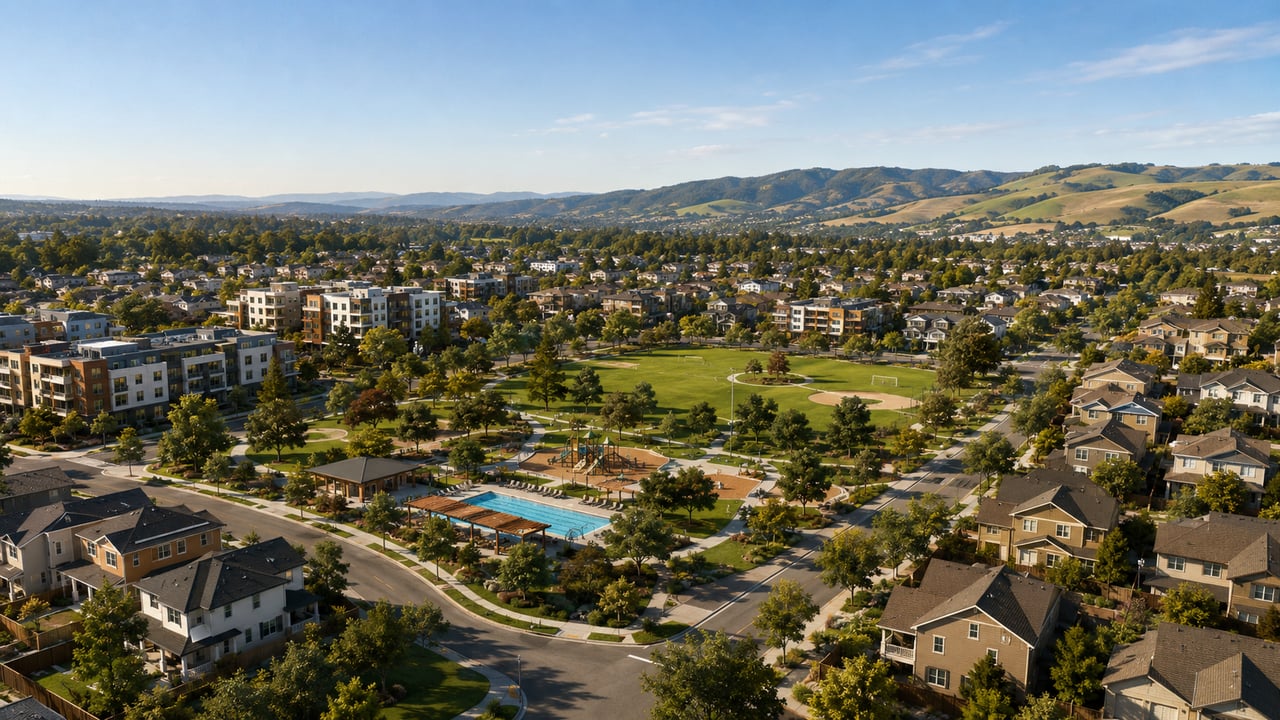
A local look at M Section housing, Magnolia Park, nearby schools, current prices and what Rohnert Park buyers and sellers should know.

An updated look at today’s mortgage rates, the economic forces controlling them, what forecasters expect through 2027 and why timing the market may cost Sonoma County … Read more

A local comparison of 2026 home prices, housing choices, neighborhoods, commute options, schools and everyday lifestyle across three popular Sonoma County communities.

A City-by-City Guide to Houses, Condos and Townhomes Under $700K in Santa Rosa, Rohnert Park, Cloverdale, Cotati, Windsor and the Russian River

A Local Guide to Penngrove Real Estate Around $1 Million — Including Home Sizes, Acreage, ADU Potential, Wells, Septic Systems and What Buyers Should Expect Before Mak… Read more
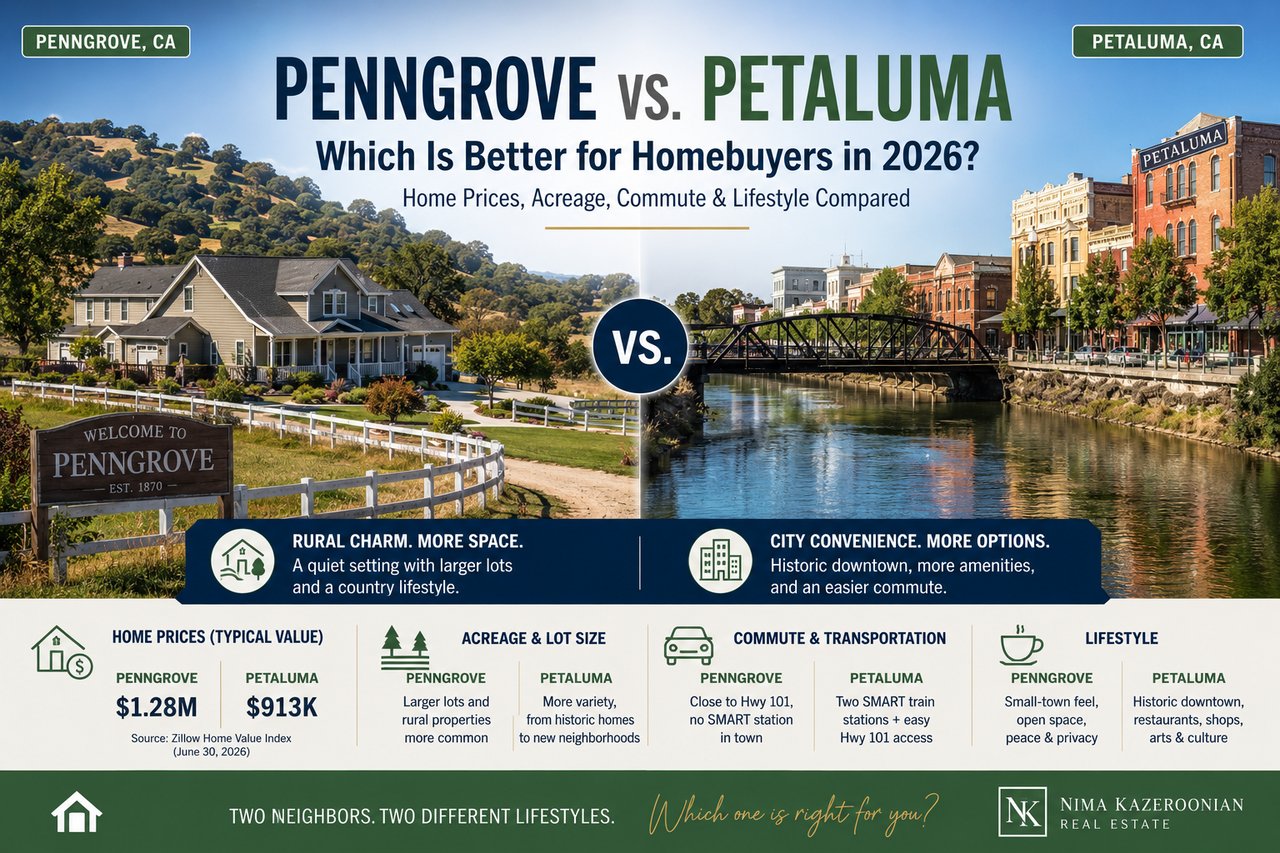
Penngrove offers more of the rural Sonoma County experience and larger-property opportunities, while Petaluma gives buyers a larger housing market, historic downtown, … Read more
Whether you're buying, selling, or exploring options, Nima is dedicated to making the process smooth, informed, and rewarding. Reach out today for a personalized consultation and let’s make your real estate goals a reality!