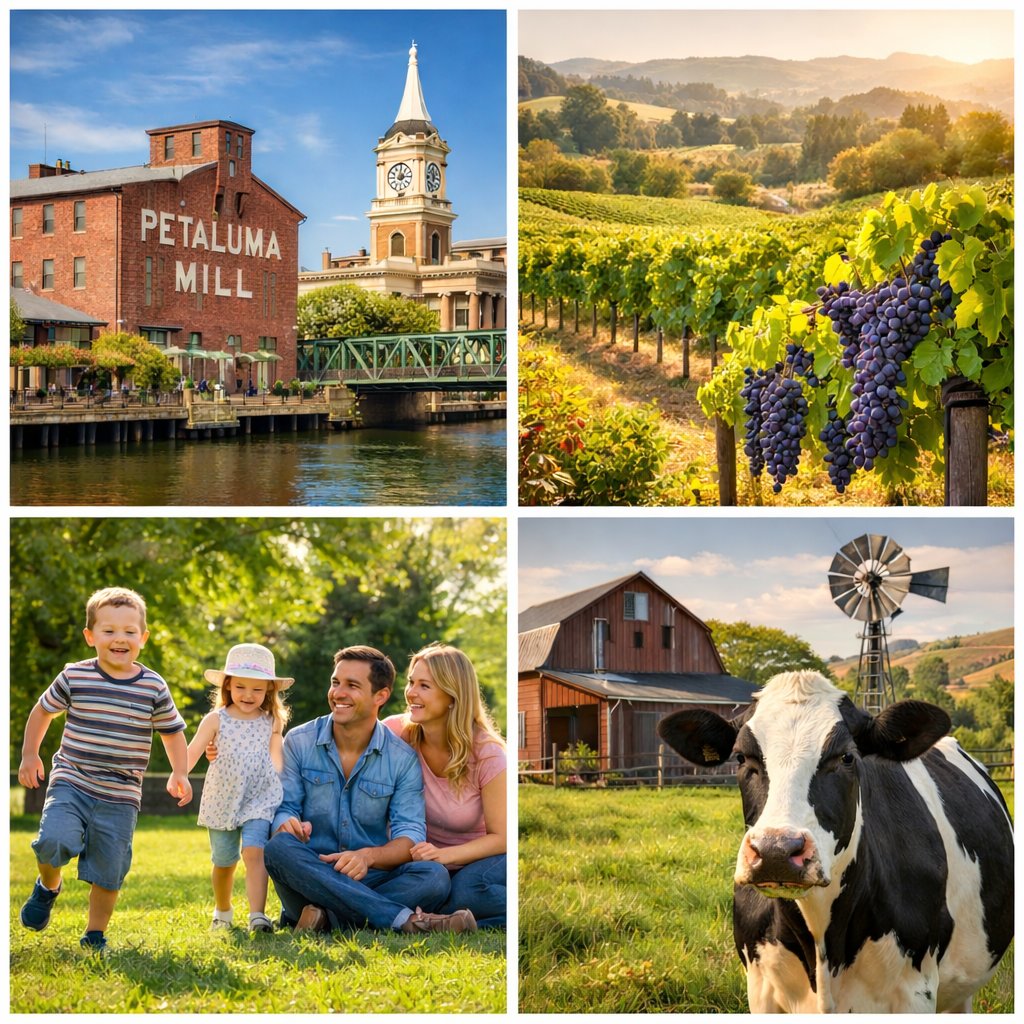
Petaluma Demographics 2026: Population Trends, Homeowner Ages & City Appeal
Nima Kazeroonian January 3, 2026
Nima Kazeroonian January 3, 2026
Petaluma Demographics 2026: Population Trends, Age Profiles & Why This Sonoma Gem Shines
Petaluma, located along the Petaluma River in Sonoma County, is more than just another North Bay community; it is a city with deep historic roots and a carefully managed growth story. Situated about 32 miles north of San Francisco, Petaluma’s blend of agriculture, heritage, and modern amenities draws new residents every year. In this blog post, I’ll explore what the current population looks like, how it has changed over the past two decades, how East Petaluma and West Petaluma differ in their homeowner age profiles, and what makes this city such a great place to call home.
According to the U.S. Census Bureau, the population of Petaluma in 2020 was 59,776. More recent estimates published by the rate of about 0.7 % per year. Data from 2023 estimate a population of roughly 59.3 k, a slight decrease from the previous year but largely consistent with the long‑term trend.
Although the figures from different sources vary slightly, the overall picture is that Petaluma’s population has been sight into the city’s demographic diversity.
Petaluma’s racial and ethnic composition has changed over the last twenty years. The city has historically been predominantly White, but the proportion of non-Hispanic White residents decreased from about 77 % in 2000 to 64.5 % in 2020. Hispanics or Latinos accounted for roughly 14.6 % of residents in 2000, rising to around 21–23 % in 2020. The city’s Asian population has remained relatively steady, hovering around 4–5 %. This gradual diversification contributes to the cultural richness of the community, reflected in the growth of multi-cultural events and expanded dining options downtown.
Having examined population trends and homeowner demographics, let’s explore what makes Petaluma so appealing to residents and visitors alike. Several unique attributes set this city apart:
Downtown Petaluma boasts one of the best-preserved historic commercial districts in California, with charming Victorian buildings, wrought-iron facades and brick storefronts. Many properties date back to the late nineteenth and early twentieth centuries. This old-world charm is a source of pride for residents and a draw for visitors. Walking tours, antique shops and local cafes create a timeless atmosphere.
Petaluma sits at the southern end of Sonoma County, providing convenient access to both wine country and the urban amenities of San Francisco. Residents can reach Napa and Sonoma Valley wineries within an hour or head south to the Golden Gate Bridge in roughly 45 minutes. The city’s location along U.S. Highway 101 and State Route 116 makes commuting and weekend getaways easy.
Being located along the Petaluma River means that boating, kayaking and paddleboarding are part of everyday life. The river’s tidal estuary invites bird-watchers and naturalists, while nearby parks like Shollenberger Park offer miles of trails, wetlands and open space. To the west, rolling hills and farmland provide scenic backdrops and opportunities for cycling, hiking and picnicking. Residents enjoy a mild Mediterranean climate with warm, dry summers and cool, wet winters.
historic downtown, Victorian homes and older residential neighborhoods. The population here is around 33,339 people with a median age of about 44.5 years. A separate estimate from Homes.com lists the median age even higher, at 48 years, and notes that about 25.9 % of residents are over 65. The average individual income in West Petaluma is approximately $66,157, indicating greater affluence relative to East Petaluma.
The typical homeowner in West Petaluma tends to be slightly older – often in their late 40s to early 60s. Because many of these properties are historic and sit on larger lots, they attract buyers who appreciate character and charm over new construction. The older housing stock and proximity to downtown’s shops, restaurants and the Petaluma River appeal to retirees, empty nesters and professionals who value walkability and heritage.
So what does it mean to have homeowners in their mid-40s on the east side and late 40s or older on the west side? These age profiles reflect the development patterns in Petaluma. East Petaluma’s newer housing subdivisions naturally attract mid-career professionals and young families looking for modern layouts and larger yards. West Petaluma, with its established neighborhoods and historical architecture, appeals to longtime residents and those seeking a quieter environment with a strong sense of history.
These differences can also influence community amenities. East Petaluma tends to have more newly built parks, schools and commercial centers tailored to family life. West Petaluma’s amenities often highlight preservation, local businesses and a more pedestrian-oriented downtown.
East Petaluma has seen most of the city’s residential development since the 1970s. Neighborhoods here often feature cul-de-sac streets and homes built in the 1980s through early 2000s. According to data provided by the U.S. Census Bureau and summarized by a local neighborhood guide, East Petaluma’s median age is 44.8 years, and the area’s population is roughly 38,000. The average individual income is around $55,400, and population density is high because of the concentration of homes on former farmland. These numbers suggest that many homeowners in East Petaluma are in their mid-40s and early 50s – typically Gen Xers and older millennials. Younger families are also common because East Petaluma offers newer subdivisions, larger houses and more modern amenities. Recent new-construction projects continue to attract first-time buyers and families seeking more living space.
West Petaluma is known for its bracket, and 20 % are aged 65 and older. Breaking the data down further, the 50–59 age group accounts for around 14 % of residents, while those in the 60–69 group account for another 14 %.
A higher median age can have several implications. Older populations may lead to higher homeownership rates, as more established adults typically have the resources to buy homes. A larger share of seniors also influences community priorities, emphasizing healthcare services, accessibility, and age-friendly amenities. Still, Petaluma remains family-friendly, with a substantial share of children and young adults. This age diversity is part of what gives the city its balanced and inclusive character.
Petaluma is often divided into two main regions: East Petaluma and West Petaluma. These areas are separated by Highway 101 and have distinct histories, housing stock, and lifestyles. Understanding the age of homeowners in these areas offers in relatively stable over the last few years. The minor decreases reported in the Data USA and world population review roughly 3,393 people between 2000 and 2010, and about 1,835 people between 2010 and 2020. That means the city’s population grew by roughly 10 % over the past two decades.
Several factors have contributed to this steady but controlled growth:
Company, Clover Sonoma and Enphase Energy, it has also retained its agricultural roots. Employment opportunities grow with these industries, but there are fewer large‑scale job booms than in bigger cities, which means growth stays moderate.
Comparing population numbers reveals that Petaluma’s growth slowed slightly in recent years. Between 2010 and 2020 the city added less than 2,000 residents, and recent estimates show a slight decline from 2023 to 2024. However, stability isn’t necessarily negative; it indicates that the community isn’t experiencing uncontrolled sprawl and that planning policies remain effective.
Another important aspect of demographics is age. The median age of Petaluma residents is around 45 years. This is significantly higher than the national median of about 38 years and suggests that Petaluma’s population skews older. According to the 2020 Census, about 20 % of residents are under 18, 60 % fall into the 18–64 data sets are typical in communities where growth is controlled and development is carefully planned. These small fluctuations can also reflect natural demographic shifts such as aging residents, household size changes and migration patterns.
To appreciate where Petaluma is today, it helps to examine its growth over time. The U.S. Census records show that the city had 54,548 residents in 2000. By 2010, that number increased to 57,941. In 2020, it climbed again to 59,776. Looking at these milestones, you’ll see that Petaluma added ro
World Population Review and the California Department of Finance project the 2025 population at around 59,393–59,793, reflecting a modest growth.
real estate
A practical guide to comparing local agents, evaluating their advice, and choosing the right representation for your next move.
From the double-digit rates of the 1980s to today’s mortgage lock-in effect, discover why higher borrowing costs haven’t made Sonoma County homes substantially cheaper.
Compare Magnolia Park’s established neighborhood with University District, including homes, parks, daily routines, and the details that can change your buying decision.
A practical guide to down payments, closing costs, mortgage payments, and assistance options for Santa Rosa and Sonoma County homebuyers.
From M Section to University District, compare taxes, HOA fees, insurance and repairs before choosing your next home.
An October–December 2026 forecast for all nine cities, how local home values compare with California counties, and why Sonoma County remains a compelling place to live.
Before you remodel, learn which updates may not pay off, what buyers notice, and which repairs deserve attention before listing.

How assumable mortgages work, what they could save, and the upfront cash requirement that can change the entire deal.
The national 30-year average reached 7.03% on September 24. Here is what that changes for payments, pricing, negotiations, and home sales in Santa Rosa and across Sono… Read more
Whether you're buying, selling, or exploring options, Nima is dedicated to making the process smooth, informed, and rewarding. Reach out today for a personalized consultation and let’s make your real estate goals a reality!