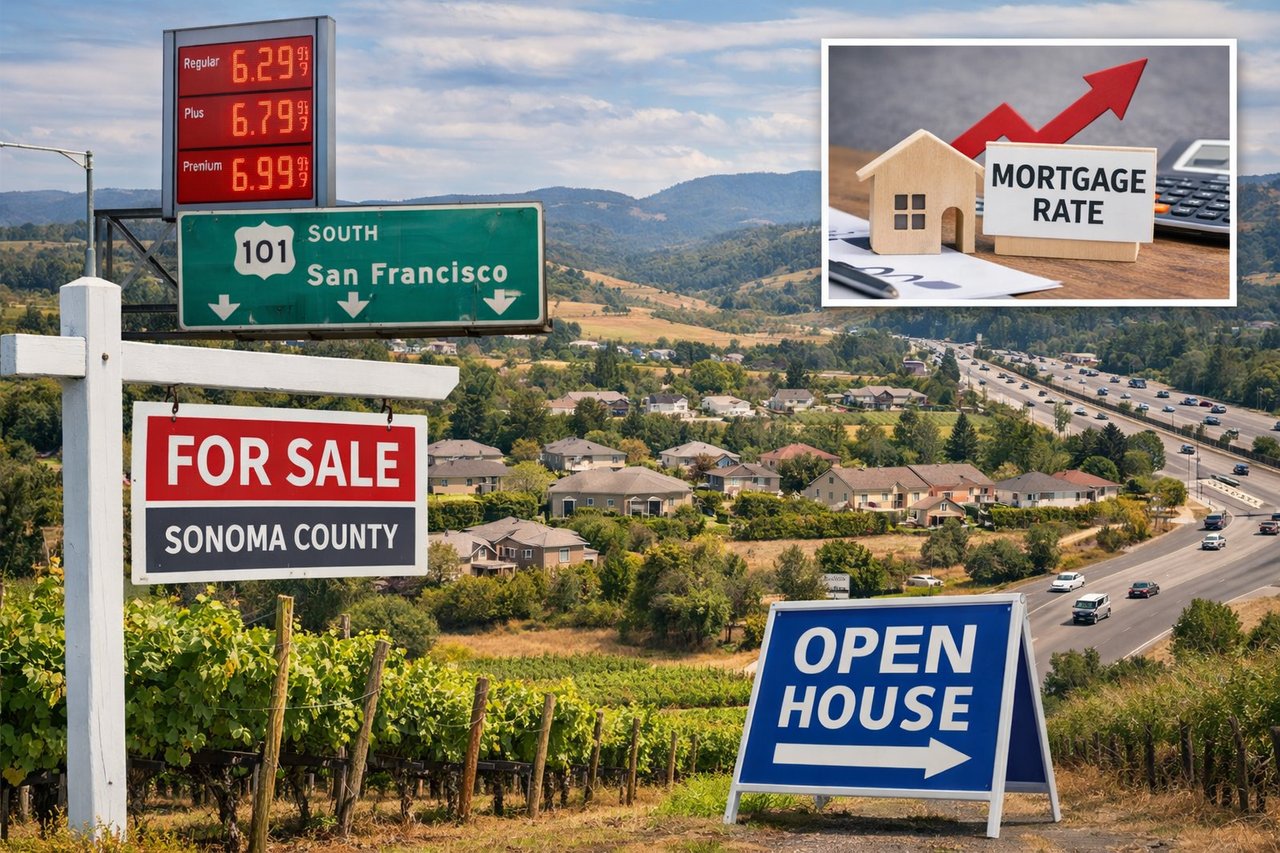
Sonoma County Real Estate in 2026: Mortgage Rates, Gas Prices & Inventory
Nima April 15, 2026
Nima April 15, 2026
Sonoma County Real Estate Market 2026: Mortgage Rates, Gas Prices, and the Inventory Story
If you feel like housing headlines are moving faster than the traffic on 101, you’re not imagining things. The Sonoma County real estate market is being pulled in a few different directions at once: mortgage rates that are still higher than we’d like, day-to-day inflation pressure driven by energy costs, and a steady (but uneven) rise in available inventory. As a broker who watches this market every day, here’s what I’m seeing in mid-April 2026 and what sellers should expect for the rest of the year.
Current economic conditions: uncertain growth and tighter wallets
The broader economy is giving buyers and sellers mixed signals. On one hand, wages and employment have held up better than many expected, and certain Bay Area tech-adjacent industries are still hiring. On the other hand, consumers are clearly feeling the squeeze from higher prices and higher borrowing costs. Even people who have the income to qualify for a home are more cautious because their monthly budget (gas, groceries, utilities, childcare) has gotten heavier.
When budgets tighten, buyers become more conservative in two ways. First, they stretch their home price less aggressively because they need room for life costs. Second, they become more selective—they want the cleanest property in the best location because they’re paying more to carry it. That combination tends to reward well-prepared sellers and penalize sellers who rely on “pandemic-market” pricing.
Mortgage rates: the market’s main governor
For context, the national average 30-year fixed-rate mortgage is still running in the mid-6% range (Freddie Mac’s weekly survey was around 6.37% in early April), which is far from the ultra-low 3% rates that dominated 2020–2021. Rates dipped below 6% briefly earlier this year but bounced back as inflation fears and bond yields rose. That jumpiness is exactly what keeps many buyers on the sidelines and forces “active” buyers to be very price-sensitive.
A key question I get from sellers is: “Is this affecting my resale price?” The honest answer is yes—less in the form of dramatic price drops and more in the form of reduced competition. Multiple offers still happen in Sonoma County, especially for well-priced homes under the luxury threshold and anything that nails the location/condition combo. But there are fewer buyers per listing, and those buyers are negotiating more.
Gas prices and the commuting equation
One underappreciated factor in Sonoma County is transportation cost. When oil prices spike (news out of the Middle East has pushed fuel costs higher this spring), it translates into higher gas prices and higher inflation in general. That matters here because many Sonoma buyers commute or at least drive frequently between the county and the broader Bay Area. Higher gas prices reduce disposable income and raise the “cost of distance.”
In practical terms, that can tilt demand slightly toward homes that shorten drive time, are closer to major job centers, or allow for a hybrid work lifestyle. It can also make buyers more patient—they’ll wait for the right home, rather than rushing into something that adds a long commute plus a bigger fill-up bill.
Is inventory at normal levels?
Inventory is up from the ultra-tight pandemic era, but it isn’t truly “normal” yet. We measure “normal” in this business as something around 5–6 months of supply—a level that balances buyers and sellers. Sonoma County is hovering closer to 3 months of inventory right now, depending on price segment. That’s a noticeable improvement from 2021–2023 (when inventory felt like an endangered species), but it still favors sellers overall.
What’s interesting is that inventory is rising unevenly. Certain submarkets—entry-level homes that need work, high HOA communities, and some higher-priced segments—are seeing more supply and longer days on market. Meanwhile, well-priced, move-in-ready homes in prime locations still move quickly. So a seller can’t assume “low inventory” will automatically rescue an overambitious price.
How many homeowners have mortgage rates at 4% or less—and are they selling?
Roughly half of outstanding mortgages in the U.S. are still at 4% or lower, based on FHFA’s National Mortgage Database aggregate data. That’s down from the peak in 2022, but it’s still a huge share of the market. Those homeowners are “rate locked”—if they sell and buy again, their new payment would almost certainly jump.
So are these low-rate owners selling? Many are not. Rate lock-in is still a major drag on listing activity because the financial jump is real. But time is doing its work: the longer rates stay elevated, the more people experience life changes that don’t care about interest rates—job relocations, divorce, aging parents, growing families, retirement moves, and personal priorities. That’s why inventory can rise even while rates stay relatively high.
For Sonoma County specifically, this means we’re getting more “have to move” sellers and fewer “might move if I get a crazy number” sellers. When those motivated sellers hit the market, they’re more likely to price realistically and negotiate strategically rather than playing waiting games.
What home sellers can expect for the remainder of 2026
Assuming mortgage rates stay in the mid-6% range, I’m expecting Sonoma County to behave like a “slow burn” seller’s market for the rest of 2026. Here’s what that means in plain English:
There is also a wildcard: if rates drift down closer to the high-5% range by late 2026 (which some forecasts suggest is possible, though not guaranteed), two things could happen: buyer demand ticks up, and some locked-in homeowners finally decide it’s worth moving. That would increase sales activity, but it could also add more listings. In other words, even good news can create a more competitive environment for sellers.
Bottom line
Sonoma County isn’t crashing. It’s normalizing, slowly, with pockets of strength and pockets of softness. Sellers can still win—and win big—if they treat the market like what it is right now: a picky, financially cautious environment shaped by mortgage rates, energy costs, and a steady drip of new inventory.
If you’re thinking about selling in 2026, the smartest move is to get a realistic valuation early, decide what upgrades are worth doing, and price in a way that creates urgency without leaving money on the table. I’m here to help you position your property to stand out in this market.
Discover what it is like to live in Rohnert Park’s M Section, including its homes, Magnolia Park, nearby schools, location, parking rules and current real estate consi… Read more

Mortgage rates may remain elevated after the Fed’s September 2026 rate increase, but correctly priced homes in Santa Rosa, Rohnert Park, Petaluma, Windsor, Cotati, and… Read more
Explore K Section’s location, Twin Creeks Park, nearby Sonoma State and the ownership costs to understand before buying.
A local look at M Section housing, Magnolia Park, nearby schools, current prices and what Rohnert Park buyers and sellers should know.

An updated look at today’s mortgage rates, the economic forces controlling them, what forecasters expect through 2027 and why timing the market may cost Sonoma County … Read more

A local comparison of 2026 home prices, housing choices, neighborhoods, commute options, schools and everyday lifestyle across three popular Sonoma County communities.
A City-by-City Guide to Houses, Condos and Townhomes Under $700K in Santa Rosa, Rohnert Park, Cloverdale, Cotati, Windsor and the Russian River
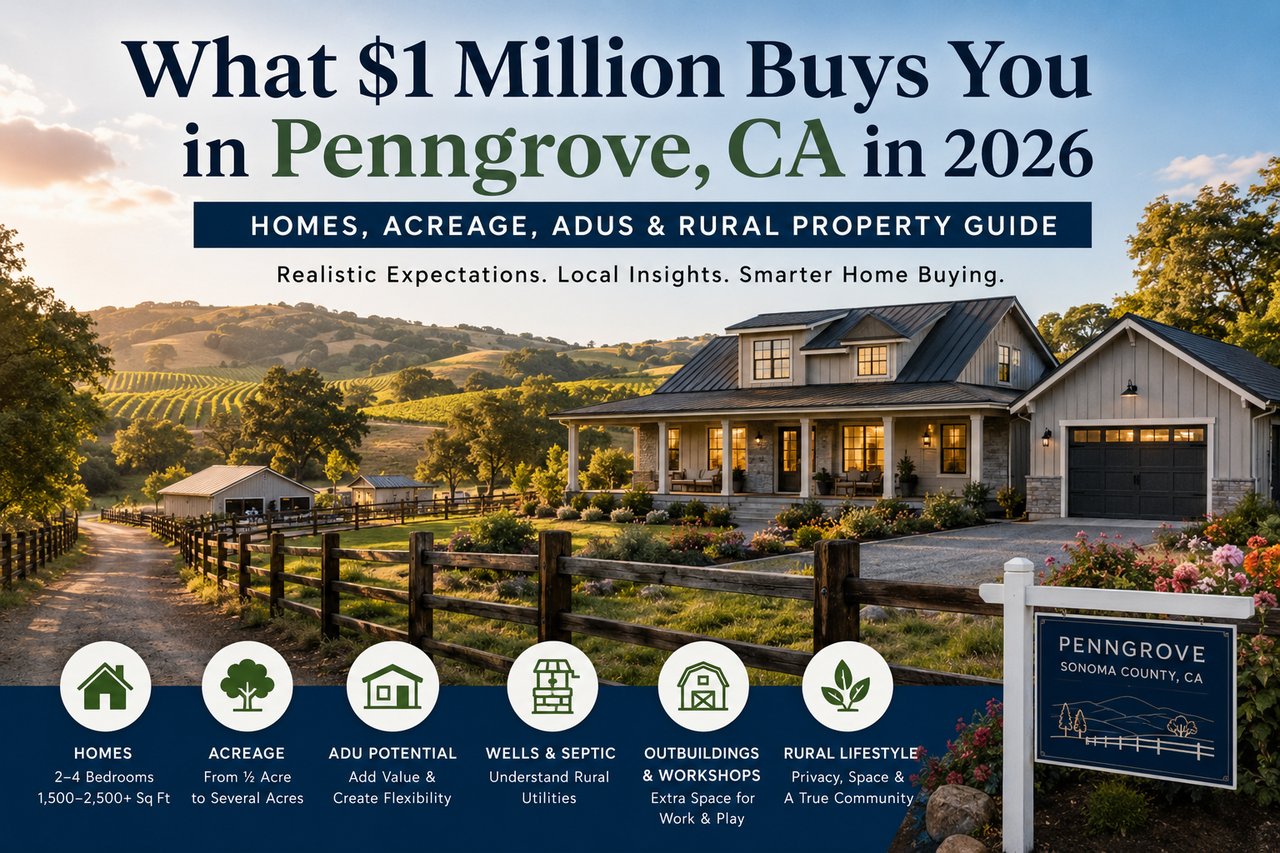
A Local Guide to Penngrove Real Estate Around $1 Million — Including Home Sizes, Acreage, ADU Potential, Wells, Septic Systems and What Buyers Should Expect Before Mak… Read more
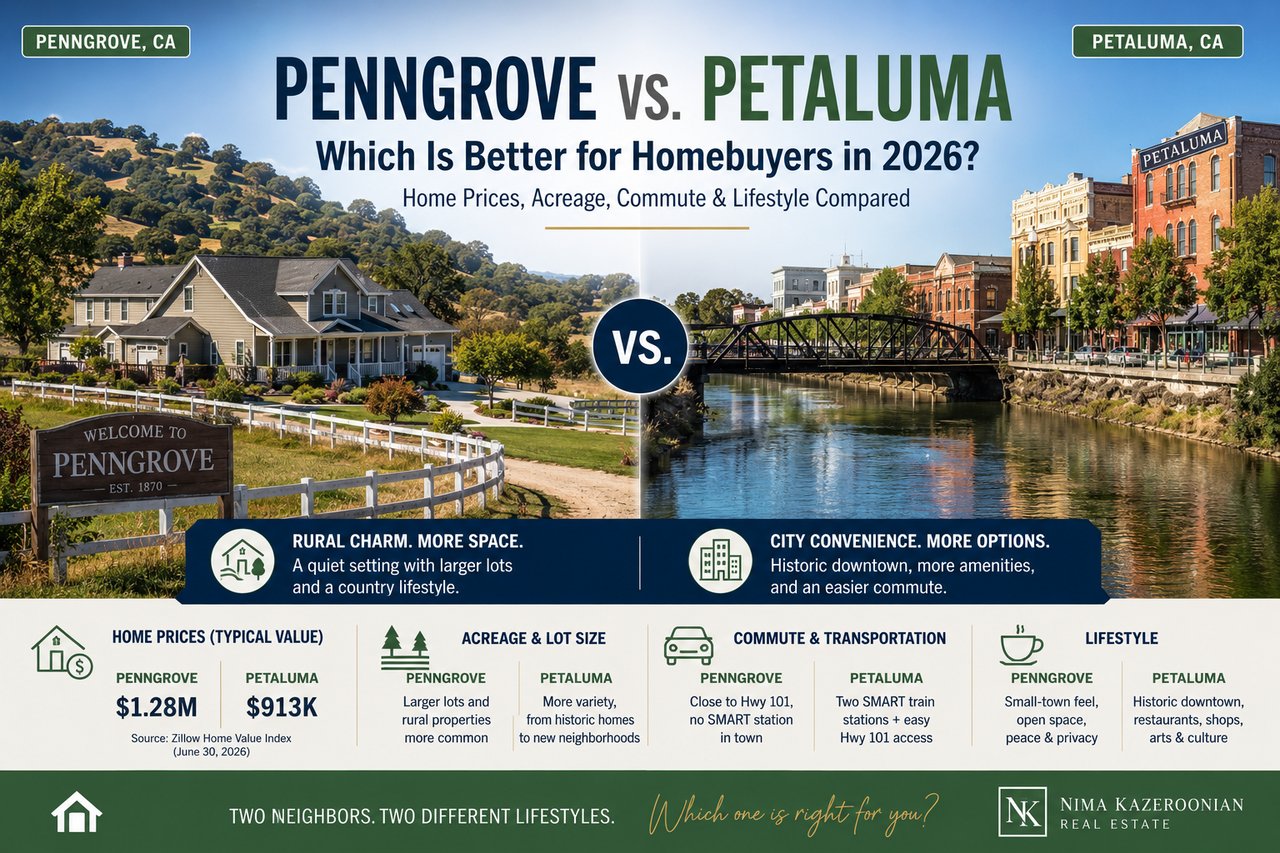
Penngrove offers more of the rural Sonoma County experience and larger-property opportunities, while Petaluma gives buyers a larger housing market, historic downtown, … Read more
Whether you're buying, selling, or exploring options, Nima is dedicated to making the process smooth, informed, and rewarding. Reach out today for a personalized consultation and let’s make your real estate goals a reality!