Sonoma vs Marin County Real Estate: Home Prices, Condo Trends & Days on Market (2025)
Nima Kazeroonian December 19, 2025
Nima Kazeroonian December 19, 2025
Northern California’s North Bay region offers two very different real‑estate experiences in neighbouring Sonoma and Marin counties. Both counties sit north of San Francisco along the U.S. 101 corridor, yet their housing markets, price points and lifestyles diverge. As the Bay Area’s housing market continues to evolve in 2025, buyers and sellers often ask how these counties compare: What do condominiums and single‑family homes cost in each county? How quickly are properties selling? Which cities and towns make up each county? And beyond the numbers, what are the advantages and drawbacks of living in Sonoma versus Marin?
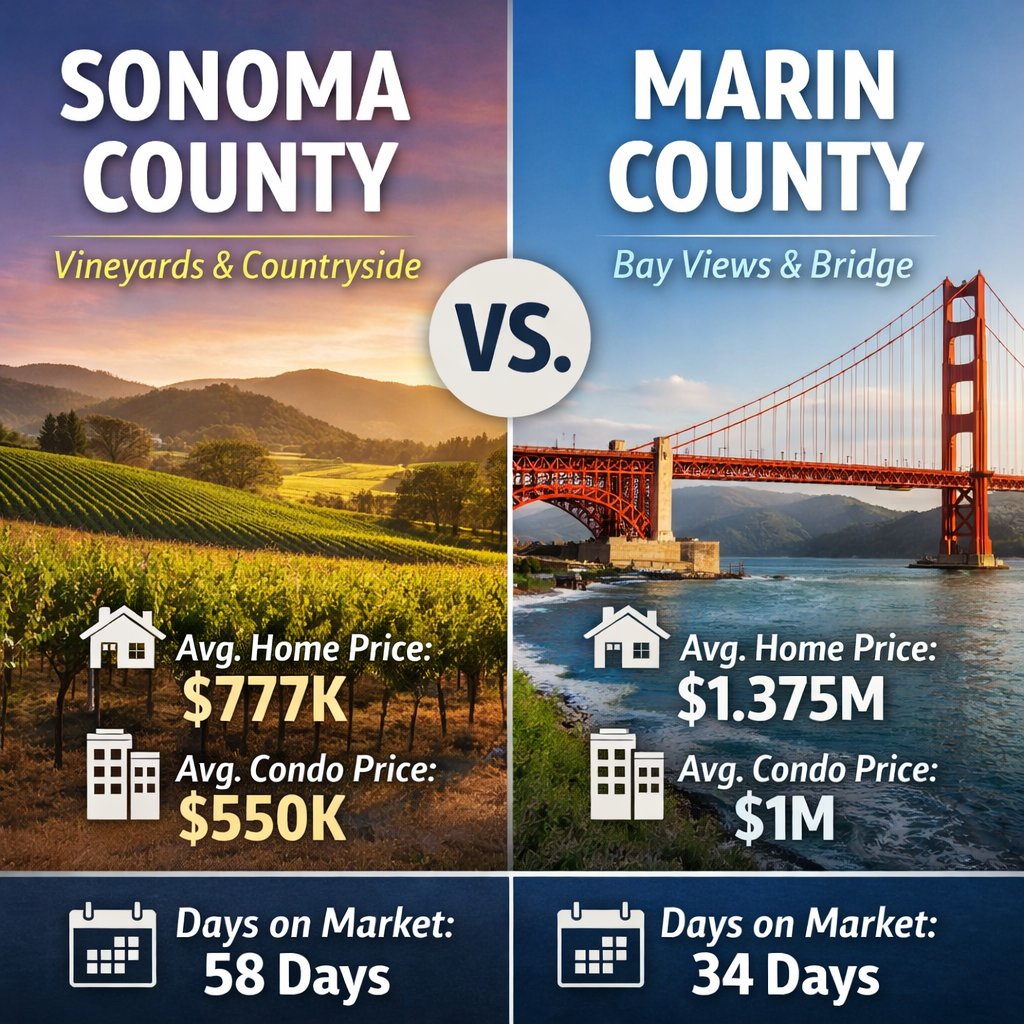
This deep dive explores those questions using the latest data available as of December 2025. Market information from reputable sources—such as Redfin, Zillow and local market reports—helps illuminate how the counties’ housing statistics differ. For example, Redfin’s November 2025 figures show the median sale price in Sonoma County around $777,500 with homes spending about 58 days on the marketmodernlivingsonoma.com. In Marin County, Redfin reports a median sale price of about $1.375 million and an average time on market of 34 dayshealdsburgluxuryliving.com. Beyond the raw numbers, each county offers distinct landscapes, amenities and community vibes.
In this blog, we will examine the characteristics that make Sonoma and Marin unique, highlight current average prices for condos and single‑family homes, break down the average days on market, outline the towns within each county, and discuss the pros and cons of living in these counties. If you’re considering buying or selling in the North Bay, or if you’re simply curious about how the markets stack up, read on for a detailed comparison.
Geography and lifestyle: Sonoma County covers roughly 1 ,768 square miles, stretching from the Pacific Coast eastward to the Mayacamas Mountains. Known worldwide for its vineyards and wineries, Sonoma also offers redwood forests, river valleys and farm land. The county seat is Santa Rosa, which is also the largest city. Popular towns include Petaluma, Sonoma (the city), Healdsburg, Sebastopol, Windsor, Rohnert Park, Cotati, Cloverdale, Guerneville, Forestville, Bodega Bay, Kenwood, Glen Ellen and Occidental. Each town offers its own ambiance; Healdsburg boasts upscale tasting rooms and a quaint plaza, while Petaluma has a historic riverfront and thriving restaurant scene. The Sonoma Valley area (Sonoma, Glen Ellen and Kenwood) combines small‑town charm with world‑class wineries and scenic rolling hills. Coastal communities like Bodega Bay and Jenner offer cool, foggy microclimates, beaches and access to outdoor recreation.
Housing stock: Sonoma County’s housing inventory ranges from historic Victorian homes in Petaluma and farmhouses in Sebastopol to mid‑century ranch houses in Santa Rosa and modern vineyard estates. There is a significant supply of single‑family homes; condominiums and townhomes exist mainly in larger cities like Santa Rosa and Rohnert Park. Newer developments around Windsor and Cloverdale provide more contemporary housing options. Because the county is geographically large, prices vary dramatically by location; a vineyard estate in Healdsburg can fetch several million dollars, while a small fixer‑upper in rural towns might be under $500,000.
Geography and lifestyle: Marin County sits directly north of the Golden Gate Bridge and covers about 520 square miles. It is bounded by the Pacific Ocean to the west, San Pablo Bay to the east and the rugged Marin Headlands to the south. The county seat is San Rafael, and other notable towns include Novato, Mill Valley, Sausalito, Tiburon, Belvedere, Fairfax, San Anselmo, Ross, Kentfield, Larkspur, Corte Madera, Greenbrae, Stinson Beach, Bolinas, Point Reyes Station, Inverness, Woodacre and Lagunitas. Marin is known for its affluent communities, stunning natural landscapes (including Mount Tamalpais and Muir Woods), and strong environmental preservation ethos. Residents enjoy immediate access to hiking, biking, beaches and coastal vistas, yet they are only minutes from San Francisco via the Golden Gate Bridge or ferry.
Housing stock: The Marin housing market is dominated by single‑family homes, often on large lots with hillside or water views. Condominiums are present in towns like Mill Valley, Tiburon and San Rafael, but inventory is relatively limited. Many houses were built in the mid‑20th century, though there are also luxury estates, mid‑century modern designs and contemporary builds. Due to strict development regulations and limited land, supply remains tight, keeping prices high.
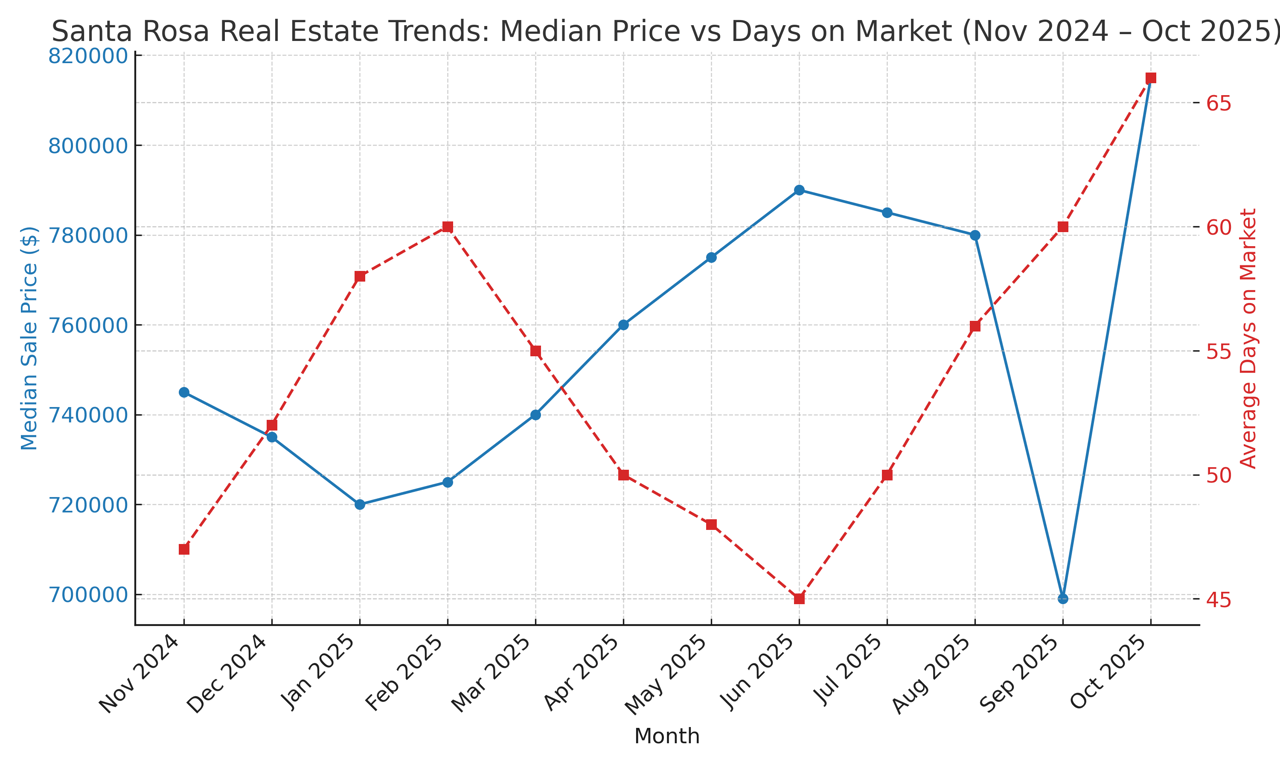
Single‑family homes: According to Redfin, the median sale price for all property types in Sonoma County in November 2025 was about $777,500modernlivingsonoma.com. Single‑family homes make up most sales; local reports suggest that mid‑priced single‑family homes in suburban areas (e.g., Santa Rosa and Petaluma) typically range from the mid‑$700,000s to $1 million. Luxury estates in Sonoma Valley and Healdsburg often exceed $2 million. RealWise Properties’ 2025 summer market report noted a median price of $849,500 across the county and an average days on market of 55healdsburgluxuryliving.com. The Schween Group’s fall 2025 report cites a median listing price of $998,000 and a median sales price of $820,000zillow.com. These numbers highlight the range depending on time of year and segment.
Condominiums: Condo sales represent a smaller slice of the market. Condos in Santa Rosa, Rohnert Park and Windsor generally start in the high $300,000s and can reach $600,000 or more for newer developments. While comprehensive county‑wide condo statistics are scarce, the September 2025 North Bay real estate report notes that condo values in Sonoma County increased 6.98 % year‑over‑yearkinokorealestate.com. Based on this growth and median sales prices in the mid‑$700,000s for all property types, an average condo price around $500,000–$650,000 in 2025 seems reasonable.
Single‑family homes: Marin’s median sale price stands markedly higher than Sonoma’s. Redfin reports that in November 2025 the median sale price was about $1.375 million, with homes going under contract in roughly 34 dayshealdsburgluxuryliving.com. Own Marin’s Fall 2025 market update specifically for single‑family homes shows a median sales price of $1,535,000, up 3.9 % year‑over‑year, and median days on market of 28 daysownmarin.com. The December 2025 Marin market report from Thomas Henthorne cites a median sold price of $1,380,000 and an average days on market of 47thomashenthorne.com. Variation depends on month, neighbourhood and price band; waterfront communities like Tiburon and Belvedere have prices north of $3 million, while more suburban areas like Novato see prices closer to $1 million.
Condominiums: Marin’s condo market is small but upscale. Condos in Sausalito, Tiburon, Mill Valley and Larkspur offer amenities like bay views and proximity to ferry service. Prices typically start around $700,000 and frequently exceed $1 million for larger units with views. The North Bay report noted that condo values in Marin County rose 20.07 % year‑over‑yearkinokorealestate.com, reflecting strong demand and limited inventory. Given this increase and the high baseline, an average condo price in Marin in 2025 is estimated around $900,000–$1.2 million.
Sonoma County: Multiple sources provide insight into how quickly homes sell. Redfin reports that homes in Sonoma County sold after about 58 days on the market in November 2025modernlivingsonoma.com. RealWise Properties’ summer 2025 market overview noted an average days on market of 55healdsburgluxuryliving.com, while the North Bay report stated that the average single‑family home listing spent 46 days on the market, a 27.78 % year‑over‑year increasekinokorealestate.com. The Schween Group’s fall 2025 report gave a slightly higher figure of 60 dayszillow.com, showing that days on market fluctuates seasonally and by price band. Overall, buyers typically have about two months to make decisions, though desirable properties (e.g., updated homes in central Santa Rosa) may sell much faster.
Marin County: Redfin indicates that homes in Marin County sold after about 34 days in November 2025healdsburgluxuryliving.com. Own Marin’s fall report showed an even shorter median days on market of 28 daysownmarin.com, suggesting that competitively priced, move‑in ready homes can go under contract within a month. The December 2025 report by Thomas Henthorne lists an average days on market of 47thomashenthorne.com, highlighting seasonal slowdowns and the effect of high‑priced listings that linger. Overall, Marin’s tighter inventory and higher demand mean properties tend to sell more quickly than in Sonoma, especially in southern towns closer to San Francisco.
Below is a non‑exhaustive list of the key towns and cities in each county. Understanding the communities helps buyers narrow their search and appreciate the variety within each region.
Sonoma County:
Santa Rosa – The county’s largest city, offering diverse neighbourhoods, shopping, dining and a growing downtown.
Petaluma – Historic riverfront city with Victorian architecture, popular restaurants and a charming downtown.
Sonoma – The heart of Sonoma Valley; features a historic plaza, tasting rooms and boutique shops.
Healdsburg – Upmarket wine‑country town with a central plaza and luxury accommodations.
Sebastopol – Eclectic town known for its arts scene and organic farms.
Windsor – Family‑friendly community with newer housing subdivisions and a vibrant town green.
Rohnert Park – College town (home to Sonoma State University) with suburban neighbourhoods.
Cotati – Small, laid‑back town adjacent to Rohnert Park.
Cloverdale – Northernmost city with a relaxed pace and access to the Russian River.
Guerneville and Forestville – River towns popular for summer recreation along the Russian River.
Bodega Bay – Coastal fishing village known for seafood and beaches.
Kenwood, Glen Ellen, Occidental, Monte Rio and Graton are smaller communities each with unique charm.
Marin County:
San Rafael – County seat with a historic downtown, the Marin Civic Center (designed by Frank Lloyd Wright) and diverse neighbourhoods.
Novato – Northernmost city offering suburban living with more affordable homes by Marin standards.
Mill Valley – Nestled at the foot of Mount Tamalpais; boasts redwoods, hiking trails and a vibrant downtown.
Sausalito – Picturesque waterfront town famous for its houseboats, galleries and views of San Francisco.
Tiburon and Belvedere – Upscale peninsulas with luxury homes and ferry service to San Francisco.
Corte Madera and Larkspur – Twin towns with shopping centres, charming downtowns and ferry access.
San Anselmo and Fairfax – Known for their small‑town feel, vintage shops and access to open space.
Ross, Kentfield, Greenbrae – High‑end residential enclaves with top‑rated schools.
Stinson Beach and Bolinas – Coastal villages offering surf culture and quiet beaches.
Point Reyes Station, Inverness, Olema – Rural West Marin communities near Point Reyes National Seashore.
Woodacre, Lagunitas, Nicasio and San Geronimo – Small inland towns in the San Geronimo Valley.
Pros:
Affordability relative to Marin: Home prices in Sonoma County are significantly lower than those in Marin. Redfin’s median sale price of around $777,500modernlivingsonoma.com is nearly half of Marin’s. This means buyers can get more space—both indoor and outdoor—for their money.
Agricultural and rural charm: Much of Sonoma remains agricultural, with vineyards, orchards and pastures. Buyers seeking land for hobby farming or those craving a quieter rural lifestyle often prefer Sonoma.
Diverse microclimates and activities: From coastal fog in Bodega Bay to sunny, warm weather in Santa Rosa, there is a microclimate for everyone. Outdoor recreation abounds—hiking in the redwoods, kayaking on the Russian River, wine tasting, cycling and exploring charming towns.
Growing communities: Cities like Petaluma and Santa Rosa are seeing revitalisation with new restaurants, breweries and cultural events, offering urban amenities without the crowds of the Bay Area’s core.
Cons:
Longer commute times: Many Sonoma residents commute to jobs in San Francisco or other Bay Area hubs. Commutes can exceed 60–90 minutes each way, especially during peak hours or in tourist seasons.
Limited public transit: The SMART commuter rail line connects some Sonoma and Marin cities, but overall public transportation is limited. Owning a car is almost essential.
Less robust job market: While there is a growing hospitality, healthcare and tech presence, the county lacks the density of high‑paying jobs found in Marin or San Francisco. This means many residents must commute or work remotely.
Rural infrastructure: In outlying areas, internet speeds, cell service and infrastructure can be less reliable.
Pros:
Proximity to San Francisco: Marin offers quick access to San Francisco via the Golden Gate Bridge or ferry. This makes it ideal for professionals who work in the city but want suburban or semi‑rural living.
Natural beauty and outdoor recreation: Marin boasts world‑class hiking and biking trails, beaches and vistas. Residents can wake up to views of the bay, mountains or redwood forests.
High‑quality schools and services: Public schools in towns like Mill Valley, Tiburon and Ross consistently rank among California’s best. The county provides ample parks, libraries and community amenities.
Prestigious communities and investment potential: Marin’s exclusive neighborhoods, limited land and high demand have kept property values strong. Homes often maintain value and may appreciate faster due to scarcity.
Cons:
High cost of living: The median sale price of $1.375 millionhealdsburgluxuryliving.com and the single‑family median of $1.535 millionownmarin.com highlight the expense. Not only are homes pricey, but taxes, insurance and everyday expenses are higher than in most counties.
Limited inventory: Strict zoning, environmental protections and geographic constraints keep supply tight. Buyers may face fierce competition, bidding wars and limited selection.
Traffic congestion: The U.S. 101 corridor and local roads can become extremely congested, particularly for commuters travelling to and from San Francisco. Parking is also limited in coastal towns.
Risk of natural hazards: Marin’s hilly terrain is prone to landslides, wildfires and flooding. Insurance costs for homes in high fire‑risk zones have risen, and some insurers have withdrawn coverage in certain areas.
Why live in Sonoma County?
Sonoma County appeals to those who value space, nature and a slower pace. Its wineries and farm‑to‑table food scene attract culinary enthusiasts. Families appreciate the more affordable homes and expansive yards. Outdoor lovers relish the endless hiking trails, rivers and coastline. There is also a growing community of remote workers who find Sonoma’s blend of rural ambiance and proximity to the Bay Area ideal. Retirees enjoy the mild climate and access to healthcare services in Santa Rosa. In addition, the county fosters a strong sense of community with farmer’s markets, local festivals and community‑supported agriculture.
Why live in Marin County?
Marin County is one of California’s most coveted addresses for good reason. Its proximity to San Francisco allows residents to enjoy world‑class dining, arts and employment opportunities while returning home to scenic open space. The county’s schools are top‑tier, drawing families who prioritise education. The lifestyle here is active and health‑oriented; on any given day you’ll see people hiking Mount Tamalpais, biking through the Headlands or paddleboarding in Richardson Bay. Marin’s microclimate provides cool, foggy summers and mild winters. For those who can afford it, Marin offers a blend of luxury living, community engagement and nature that is hard to replicate.
Sonoma and Marin counties, though neighbours in the North Bay, offer markedly different real‑estate landscapes. Sonoma’s affordability, rural charm and diverse microclimates make it attractive for buyers seeking space and value, while Marin’s proximity to San Francisco, high‑end amenities and protected open space cater to those willing to pay a premium for convenience and prestige.
When comparing average prices, Marin County commands roughly double the median sale price of Sonoma, with single‑family homes often exceeding $1.5 million ownmarin.com. Condos in Marin are similarly high‑priced, often starting near $900,000 due to scarce inventory and high demand. Sonoma County, by contrast, offers single‑family homes around $800,000 and condos in the $500,000–$650,000 range. Days on market differ too: Marin homes typically sell within a month to six weeks healdsburgluxuryliving.com, whereas Sonoma properties can take 50–60 days or more modernlivingsonoma.com.
Ultimately, the choice between these counties depends on lifestyle priorities. Those seeking vineyards, space and relative affordability may gravitate toward Sonoma. Buyers valuing quick access to San Francisco, top schools and coastal beauty may opt for Marin. Both counties, however, provide exceptional quality of life with abundant natural beauty, community spirit and a unique Northern California vibe. As the market evolves through 2025 and beyond, staying informed about price trends and inventory levels will help buyers and sellers make smart real‑estate decisions.

Along with this checklist, seeking guidance from a professional is always a good idea!


Gov't Shutdown


Less competition, motivated participants, and market insights for the season

When to hire Nima, secure pre-approval, and navigate the North Bay market

Exploring the pros and cons of homeownership versus renting across different time horizons
Whether you're buying, selling, or exploring options, Nima is dedicated to making the process smooth, informed, and rewarding. Reach out today for a personalized consultation and let’s make your real estate goals a reality!