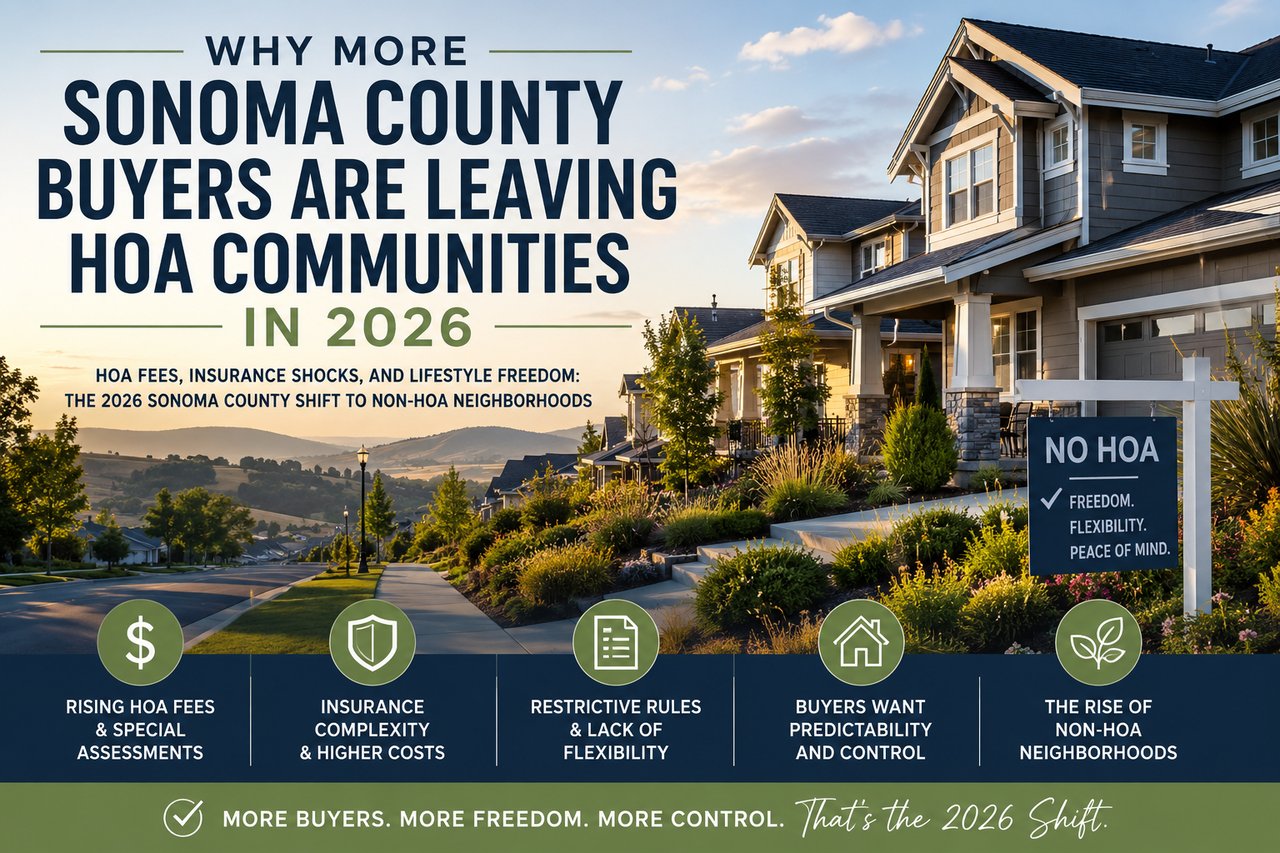
Why More Sonoma County Buyers Are Leaving HOA Communities in 2026
Nima Kazeroonian May 26, 2026
Nima Kazeroonian May 26, 2026
If you’ve been watching the 2026 Sonoma County real estate market, you’ve probably noticed a shift that’s easy to miss in quick “market snapshot” updates but obvious when you sit down with buyers week after week:
more people are prioritizing homes without HOA fees, rules, or unexpected HOA surprises.
This isn’t just a “picky buyer” trend. It’s a mix of affordability pressure, insurance realities, and lifestyle preferences—combined with the fact that in 2026, buyers have endless access to listings and reviews, and they’re doing deeper due diligence than ever.
Below, I’ll break down what’s driving this, what it means for sellers, and what buyers should know before deciding HOA vs. no HOA in Sonoma County.
For years, HOA dues were simply part of the budgeting conversation—like property taxes or utilities. In 2026, HOA costs are getting treated like “danger money.” Buyers aren’t just asking, “What are dues?” They’re asking:
That last part is huge, because buyers are connecting the dots between monthly HOA dues and unexpected assessments that can show up later. Even a “reasonable” HOA can become expensive overnight if the community faces big repairs.
When you combine HOA dues + taxes + insurance + interest rates + inflation, buyers start thinking:
“If I’m going to spend that much monthly, I want maximum control over the property.”
The insurance conversation is no longer just, “Can I get coverage?” It’s also:
The problem is this: insurance complexity makes HOA communities harder to evaluate quickly, and buyers don’t like uncertainty. The more uncertainty, the more buyers gravitate toward “simple.”
A single-family home without an HOA can still come with insurance challenges, but many buyers feel there are fewer layers, fewer policy dependencies, and fewer compliance headaches.
The lifestyle side of this trend matters just as much as money.
In 2026, buyers want freedom:
Even buyers who ultimately choose an HOA property are entering the process with suspicion, asking:
“Is this HOA going to feel like a partnership—or like a strict landlord?”
That perception matters—and it’s shifting buyer demand.
One of the underrated changes in 2026 is how buyers are calculating risk.
A property without an HOA:
…but buyers increasingly see that as predictable compared to the “unknown unknowns” of HOA assessments and policy changes.
Predictability is appealing in a world where rates fluctuate, grocery bills aren’t dropping, and everyone is trying to lock in stability.
To be fair, a well-run HOA can be a huge asset and should not be dismissed automatically. Some HOAs:
The issue is not “HOAs are bad.” The issue is:
So if you’re a seller in an HOA community, your job becomes proving your HOA is the “good kind.”
If you’re selling a home with HOA dues in Sonoma County in 2026, you’re going to run into buyer objections even before they tour the property. Here’s how sellers can fight back:
If buyers sense you’re hiding the HOA reality, they’ll assume the worst.
Be ready to provide:
If the HOA covers:
…those are strong talking points that convert “dues” into “included benefits.”
Buyers don’t need zero risk. They need manageable risk.
Help them understand what has already been handled and what is proactively planned.
If you’re shopping in Sonoma County and the perfect home is in an HOA, don’t run away—but don’t buy blind either.
Ask:
If you’re highly independent, or you travel a lot, or you hate petty arguments, an HOA may feel stressful.
Buyers aren’t just leaving HOA communities; they’re trending toward certain home types and neighborhood styles:
Even in more “suburban” parts of Sonoma County, the no-HOA premium often comes down to control: buyers want to shape their environment.
In 2026, leaving HOA communities isn’t a phase—it’s a logical response to:
If you’re buying:
If you’re selling in an HOA:
Instead, prove your HOA is organized, stable, well-funded, and high-value. That’s how you win in today’s search-driven market, where buyers can figure out problems in minutes—and move on just as fast.
Discover what it is like to live in Rohnert Park’s M Section, including its homes, Magnolia Park, nearby schools, location, parking rules and current real estate consi… Read more

Mortgage rates may remain elevated after the Fed’s September 2026 rate increase, but correctly priced homes in Santa Rosa, Rohnert Park, Petaluma, Windsor, Cotati, and… Read more
Explore K Section’s location, Twin Creeks Park, nearby Sonoma State and the ownership costs to understand before buying.
A local look at M Section housing, Magnolia Park, nearby schools, current prices and what Rohnert Park buyers and sellers should know.

An updated look at today’s mortgage rates, the economic forces controlling them, what forecasters expect through 2027 and why timing the market may cost Sonoma County … Read more

A local comparison of 2026 home prices, housing choices, neighborhoods, commute options, schools and everyday lifestyle across three popular Sonoma County communities.
A City-by-City Guide to Houses, Condos and Townhomes Under $700K in Santa Rosa, Rohnert Park, Cloverdale, Cotati, Windsor and the Russian River
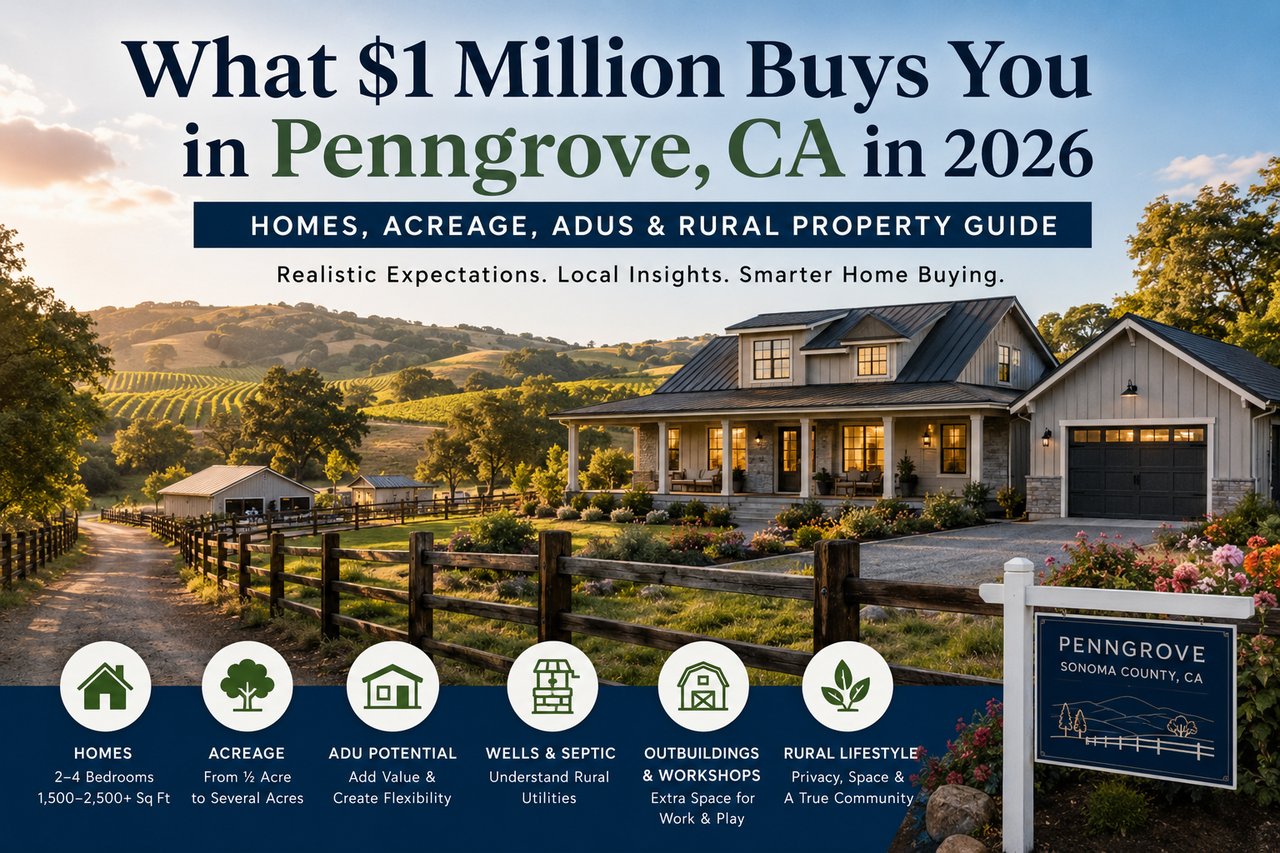
A Local Guide to Penngrove Real Estate Around $1 Million — Including Home Sizes, Acreage, ADU Potential, Wells, Septic Systems and What Buyers Should Expect Before Mak… Read more
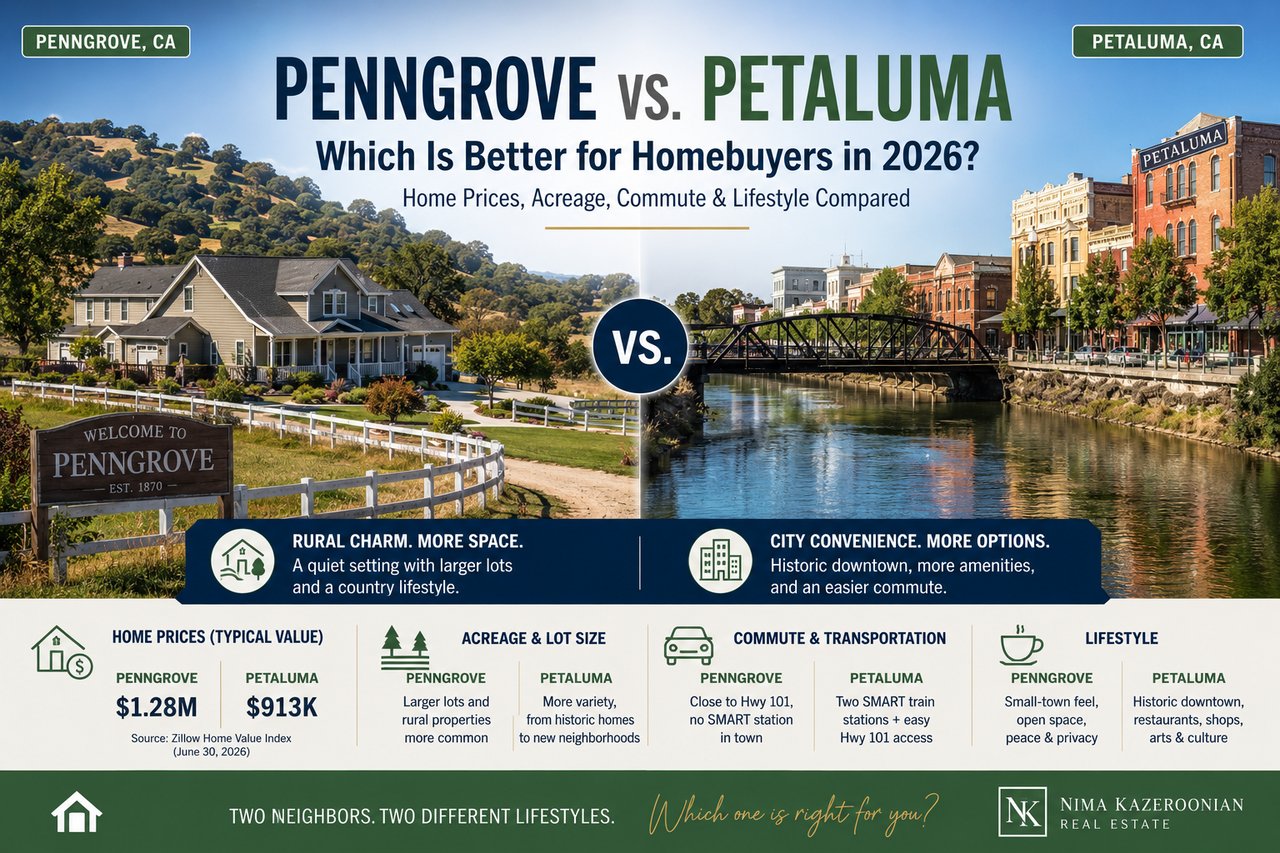
Penngrove offers more of the rural Sonoma County experience and larger-property opportunities, while Petaluma gives buyers a larger housing market, historic downtown, … Read more
Whether you're buying, selling, or exploring options, Nima is dedicated to making the process smooth, informed, and rewarding. Reach out today for a personalized consultation and let’s make your real estate goals a reality!