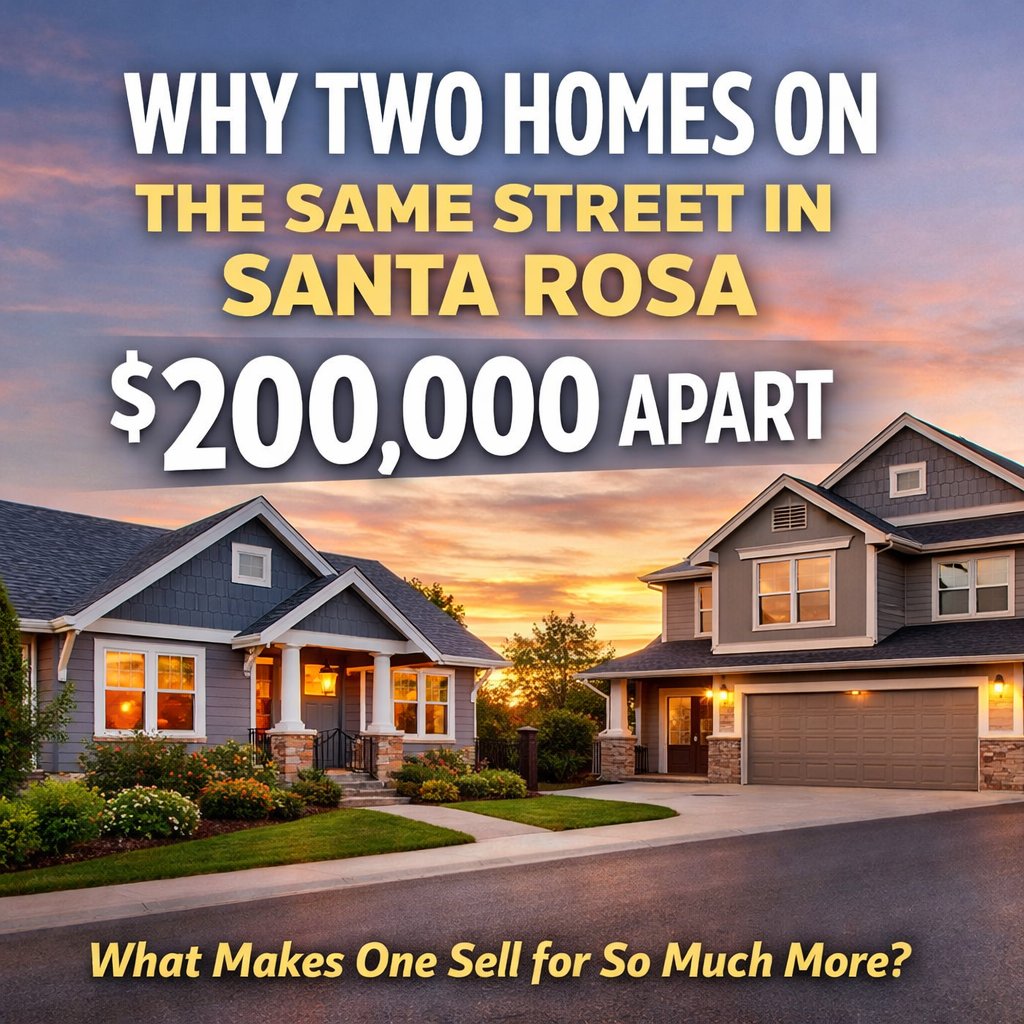
Why Two Homes on the Same Street in Santa Rosa Can Sell for $200,000 Apart
Nima Kazeroonian January 15, 2026
Nima Kazeroonian January 15, 2026
If you’ve ever watched two homes on the same Santa Rosa street sell months apart — and one closes for $200,000 more than the other — you’re not alone in wondering how that’s possible.
To most homeowners and buyers, it feels unfair, random, or even manipulated.
But the truth is this: home values are rarely determined by surface-level similarities like square footage, bedroom count, or even location alone. In Santa Rosa, pricing gaps between “nearly identical” homes are often driven by micro-factors that most people don’t realize matter — and those factors can quietly add or subtract six figures from a sale.
As a local broker who analyzes Santa Rosa sales daily, I can tell you this isn’t an anomaly. It’s the market doing exactly what it’s designed to do.
Let’s break down why this happens — and what it means for you as a homeowner or buyer.
Two homes on the same street are never competing in the exact same market.
Even a 30–60 day difference can change outcomes dramatically due to:
Interest rate shifts
Seasonal buyer demand
New competing listings
Recent comparable sales resetting expectations
In Santa Rosa, buyer urgency tends to spike during certain windows — especially spring and early summer — while slowing noticeably toward late fall and year-end. A home that hits the market during peak buyer competition can attract multiple offers, while the same home listed weeks later may face a calmer, more price-sensitive audience.
This alone can create a five- or six-figure gap.
One of the biggest reasons two similar homes sell so far apart comes down to initial pricing strategy.
Homes priced:
Just below key search thresholds
Slightly under perceived market value
Or aligned with buyer psychology
…tend to attract more showings, more urgency, and more competitive offers.
On the flip side, homes that start too high often sit longer, accumulate days on market, and invite price reductions — which buyers interpret as weakness, even if the home is objectively solid.
In Santa Rosa, perception matters as much as value. Once momentum is lost, it’s difficult to recover — and that’s how a nearly identical home ends up selling for far less than the one down the street.
“Same street” does not mean “same value.”
Small differences can make a big impact:
Proximity to traffic noise
Corner lot vs interior lot
Adjacent homes or open space
Slope, drainage, or privacy differences
Buyers subconsciously price these factors in, even if they can’t articulate them clearly.
Two homes may share an address line, but buyers don’t evaluate them equally — and the market reflects that.
A slightly smaller home that feels turn-key will often outperform a larger home that feels dated or overwhelming.
Buyers today place a premium on:
Updated kitchens and bathrooms
Clean, neutral finishes
Move-in readiness
In Santa Rosa, buyers are especially sensitive to perceived maintenance — roofing, HVAC, electrical, and general upkeep all factor heavily into value. A home that feels “easy” emotionally and financially often commands a higher price, even if the specs are similar.
This is one of the most underestimated factors in pricing differences.
Professional preparation — including:
Strategic staging
High-quality photography
Correct lighting and layout
Thoughtful listing descriptions
…changes how buyers emotionally connect to a home.
Buyers don’t just buy square footage — they buy how a home makes them feel. And feelings drive offers.
Two homes with identical floor plans can create completely different reactions depending on how they’re presented. That difference shows up clearly in the final sale price.
Homes that generate early interest often benefit from buyer competition, which drives prices upward naturally.
Multiple offers:
Increase urgency
Reduce buyer hesitation
Encourage stronger terms
A home that attracts two or three motivated buyers may sell significantly higher than a similar home that never creates that competitive environment.
This is especially common in Santa Rosa, where buyers monitor new listings closely and react quickly to well-priced, well-presented homes.
Buyers are emotional decision-makers, even when they believe they’re being logical.
Small psychological triggers matter:
How quickly the home sells
Whether others are interested
How “rare” the home feels
Whether it appears to be a good decision socially
Once a home is perceived as desirable, buyers are more willing to stretch. When a home feels uncertain or overlooked, they pull back.
This emotional pricing effect is real — and it explains many of the large gaps between similar sales.
If you’re a homeowner watching neighbors sell for wildly different prices, the takeaway is simple:
The market isn’t random — but it is unforgiving of missteps.
The difference between an average sale and a standout sale often comes down to:
Strategy
Timing
Presentation
Execution
Not luck.
For buyers, understanding these dynamics helps you:
Spot overpriced listings
Understand why certain homes spark bidding wars
Make stronger, more strategic offers
It also explains why some “similar” homes feel more expensive — because they are being evaluated differently by the market.
Two homes on the same Santa Rosa street can sell for $200,000 apart because real estate value is nuanced, local, and highly strategic.
This is why online estimates and surface-level comparisons often miss the mark — and why working with someone who understands how buyers actually think matters.
Discover what it is like to live in Rohnert Park’s M Section, including its homes, Magnolia Park, nearby schools, location, parking rules and current real estate consi… Read more

Mortgage rates may remain elevated after the Fed’s September 2026 rate increase, but correctly priced homes in Santa Rosa, Rohnert Park, Petaluma, Windsor, Cotati, and… Read more
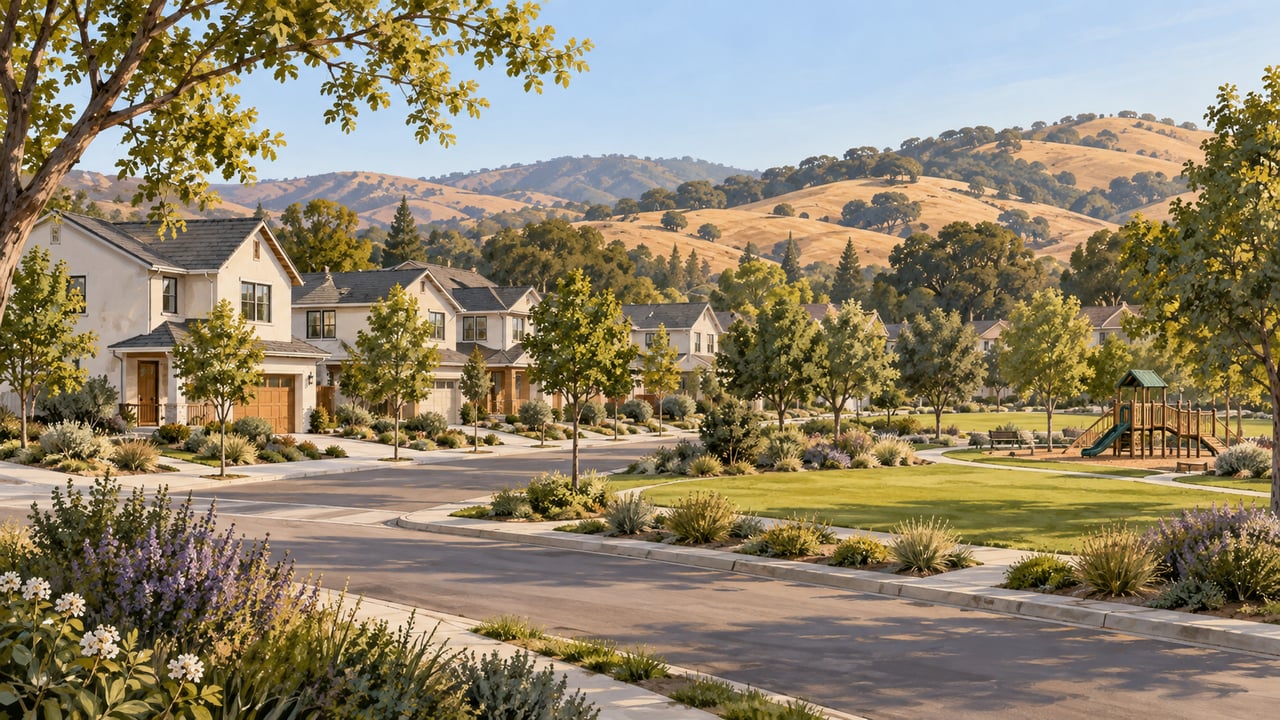
Explore K Section’s location, Twin Creeks Park, nearby Sonoma State and the ownership costs to understand before buying.
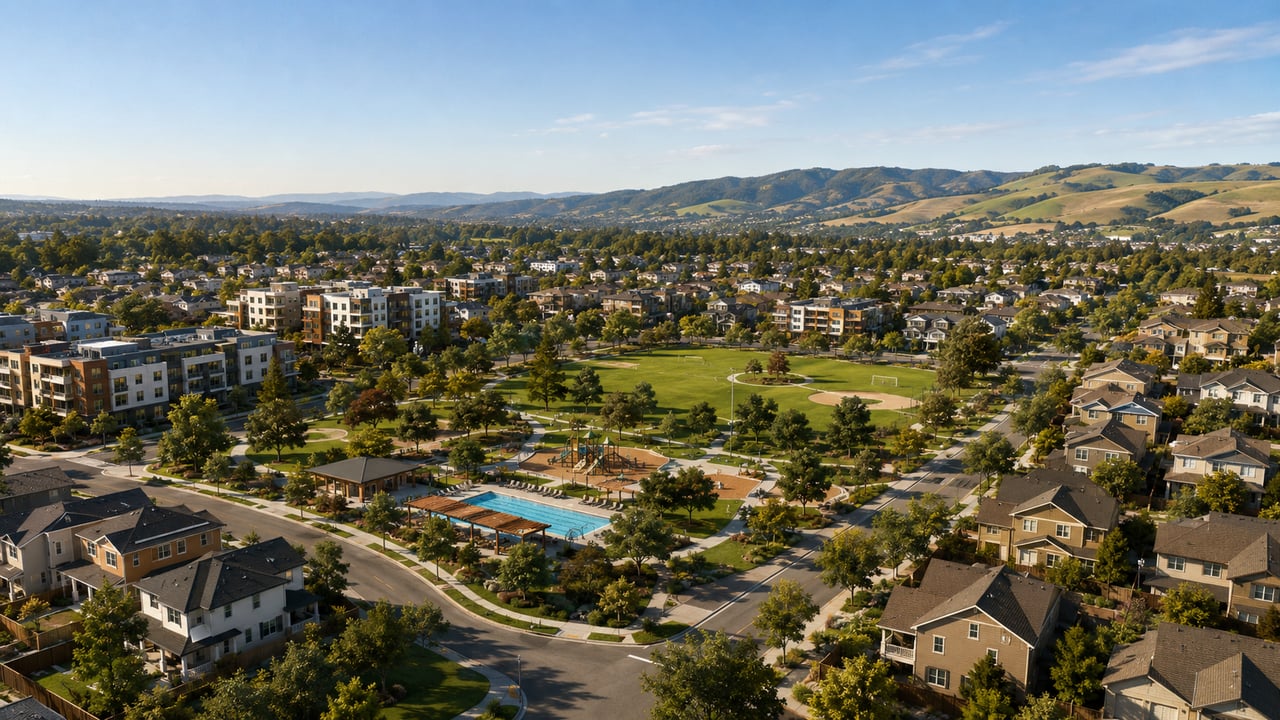
A local look at M Section housing, Magnolia Park, nearby schools, current prices and what Rohnert Park buyers and sellers should know.

An updated look at today’s mortgage rates, the economic forces controlling them, what forecasters expect through 2027 and why timing the market may cost Sonoma County … Read more

A local comparison of 2026 home prices, housing choices, neighborhoods, commute options, schools and everyday lifestyle across three popular Sonoma County communities.
A City-by-City Guide to Houses, Condos and Townhomes Under $700K in Santa Rosa, Rohnert Park, Cloverdale, Cotati, Windsor and the Russian River

A Local Guide to Penngrove Real Estate Around $1 Million — Including Home Sizes, Acreage, ADU Potential, Wells, Septic Systems and What Buyers Should Expect Before Mak… Read more
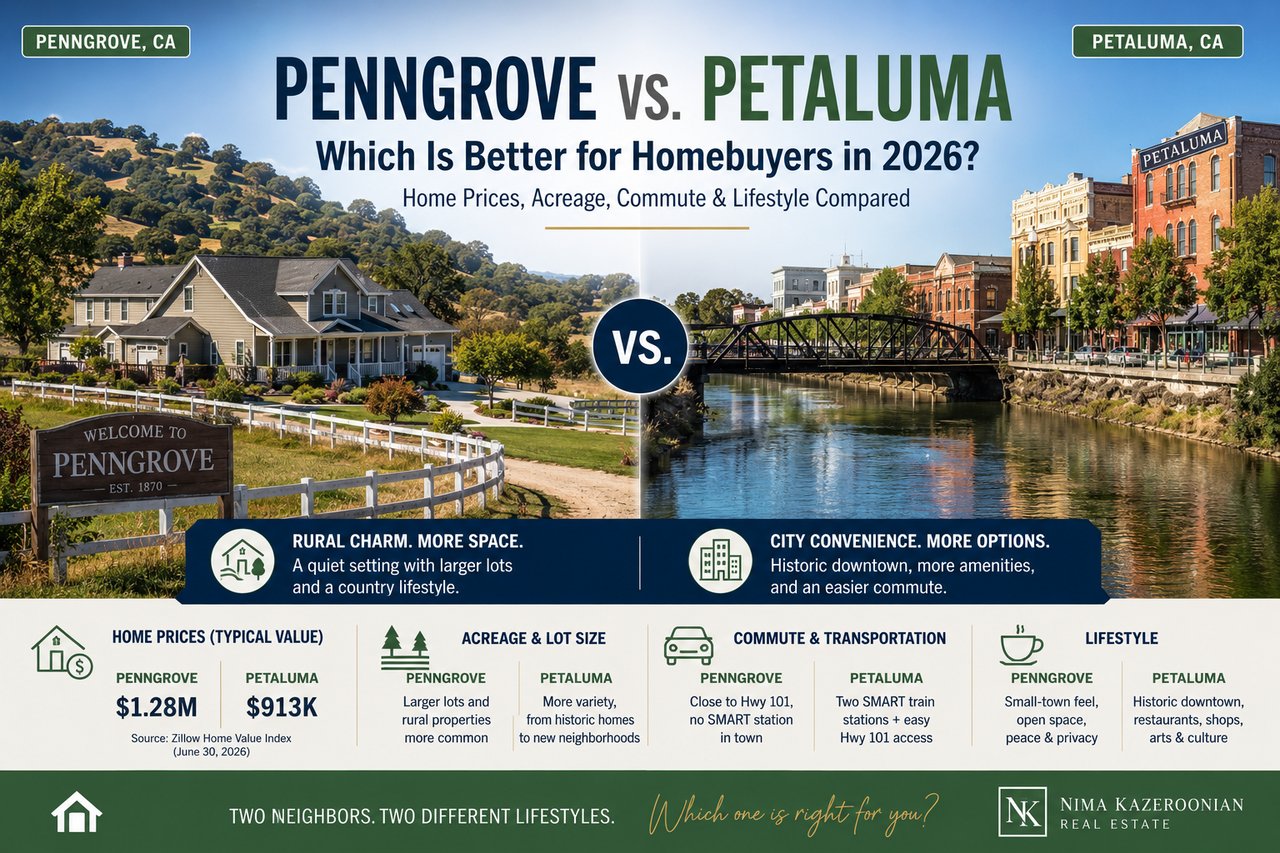
Penngrove offers more of the rural Sonoma County experience and larger-property opportunities, while Petaluma gives buyers a larger housing market, historic downtown, … Read more
Whether you're buying, selling, or exploring options, Nima is dedicated to making the process smooth, informed, and rewarding. Reach out today for a personalized consultation and let’s make your real estate goals a reality!